










How to Set Up Perfect Lighting for Beauty Videos and Makeup Tutorials
Beauty videos and makeup tutorials depend on one thing more than almost any other type of content: accurate, flattering, and consistent lighting. Viewers need to see the true color of foundation, lipstick, eyeshadow, contour, shimmer, skin texture, and product finish. If the lighting is too warm, too green, too harsh, or too uneven, even the best makeup look can appear inaccurate on camera.
For beauty creators, lighting is not just a technical setup. It directly affects trust. When the viewer sees clean skin tones, clear product color, and sharp close-up details, the content feels more professional and more useful. This matters whether you are filming a long-form YouTube makeup tutorial, a TikTok transformation, an Instagram Reel, a product review, a skincare routine, or a live shopping demo.
The good news is that a professional beauty lighting setup does not need to be large or complicated. With compact tools from ZHIYUN, creators can build a small desktop or mobile setup that produces soft skin glow, stable framing, accurate color, and flexible background effects.
Why Color Accuracy is Critical for Makeup Content Creators
Color accuracy is the foundation of beauty content. Makeup products are sold, reviewed, and judged by color. A foundation shade that looks correct under bad lighting may appear completely different in daylight. A blush may look too orange, a lipstick may shift too purple, or an eyeshadow palette may lose its subtle undertones if the lighting is not controlled.
For makeup tutorials, inaccurate lighting can create two major problems. First, viewers may not understand the real effect of the product. Second, the creator may lose credibility because the result does not match what the audience experiences in real life.
The first step is to avoid mixed lighting. Mixed lighting happens when different light sources with different color temperatures hit the face at the same time. For example, window daylight from one side, warm ceiling light from above, and a small LED light from the front can all create different color casts on the skin. This makes foundation matching, contour blending, and product swatching harder to judge.
For clean beauty videos, choose one main lighting direction and control the surrounding light. If you use a dedicated video light as the key light, turn off unnecessary ceiling lights. If you use natural window light, avoid adding warm lamps that change the skin tone. Consistency is more important than brightness alone.
White balance is also essential. Do not rely entirely on automatic white balance, especially when filming makeup steps from start to finish. Auto white balance may shift during the video when you hold up a product, move closer to the camera, or change the background. This can make the same makeup look different from one clip to another.
A useful beauty workflow is to set your lighting first, then set white balance manually, then test the look on camera. Check the skin, white objects, product packaging, and neutral tones in the frame. If the white areas look yellow, blue, green, or magenta, adjust the lighting before recording.
In beauty content, “pretty lighting” is not enough. The lighting must be honest, repeatable, and flattering at the same time.
Creating Soft, Uniform Illumination for a Flawless Skin Glow
Soft, uniform lighting is the most reliable choice for makeup tutorials because it reduces harsh shadows and keeps the face easy to read. The viewer should clearly see both sides of the face, the eye area, the lips, and the product texture without distracting contrast.
The easiest starting point is a front-facing key light placed slightly above eye level. This creates a clean beauty look while keeping the eyes bright. If the light is too low, it can create unnatural shadows. If the light is too high, the eye sockets may become dark. The best position is usually slightly higher than the face and angled downward gently.
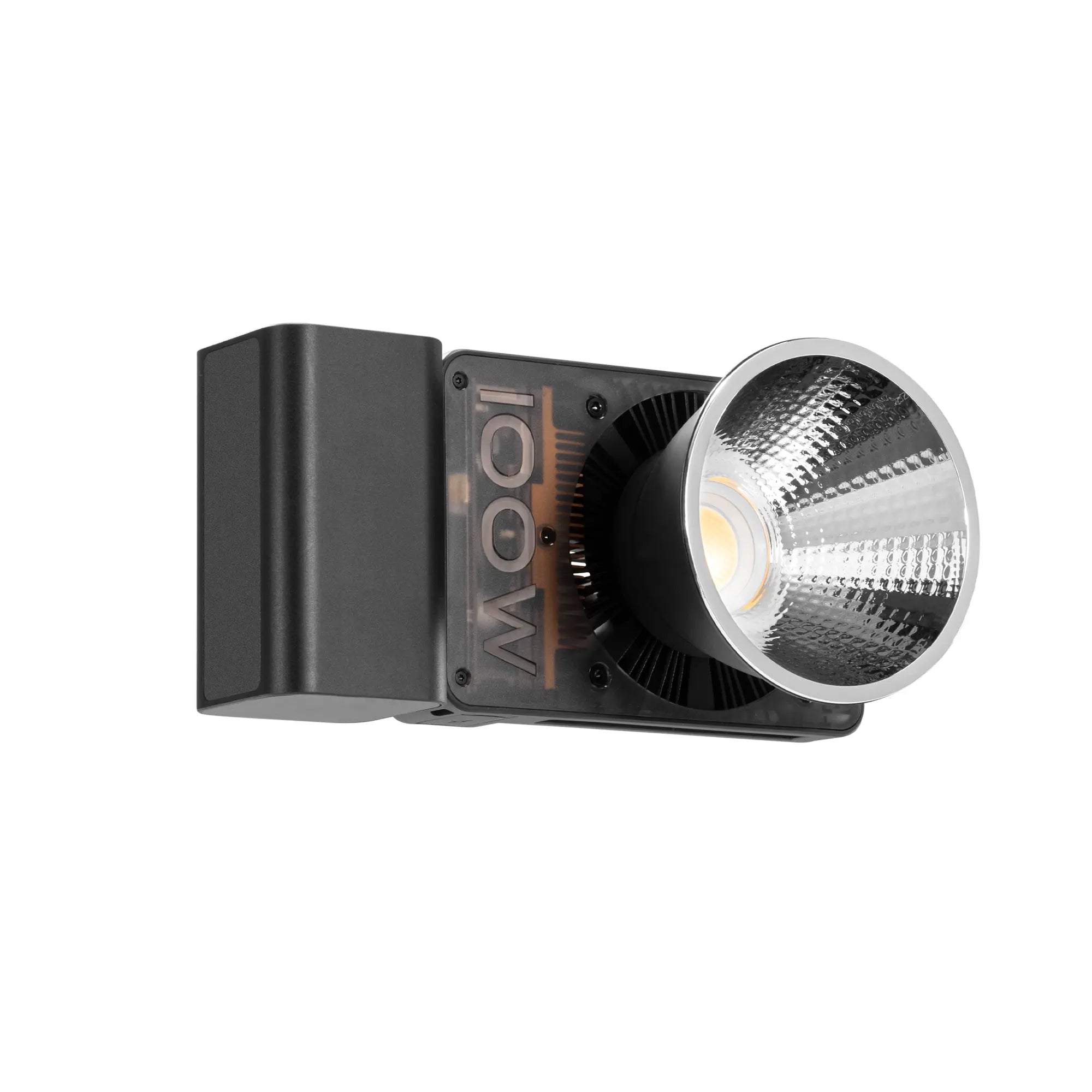
For creators who need a compact desktop light, the ZHIYUN FIVERAY M20C is a practical choice for beauty videos and makeup tutorials. Its pocket-sized design is suitable for small desks, home studios, dressing tables, and mobile content setups. Because it supports adjustable color temperature and RGB control, it can be used for both natural skin-tone lighting and creative background accents.

When using the FIVERAY M20C as a key or fill light, place it close enough to brighten the face but not so close that it creates harsh glare on the forehead, cheeks, or nose. For softer results, diffuse the light or bounce it from a white wall, reflector, or soft surface. A slightly diffused light source makes the skin look smoother while still preserving real texture.
For makeup tutorials, avoid lighting that is too dramatic. Strong side lighting may look cinematic, but it can hide blending mistakes or exaggerate texture. A soft front light combined with gentle side fill is usually more useful for educational beauty content.
A simple setup can include one main light in front of the creator and a weaker fill light on the opposite side. If you only use one light, center it carefully and keep the face evenly illuminated. If you use two lights, make sure they are set to the same or compatible color temperature so the skin does not look uneven.
The goal is not to erase every shadow. Some soft shadow helps preserve facial dimension. The goal is to avoid harsh contrast that makes makeup application hard to follow.
Capturing Sharp Macro Details Without Losing Camera Focus
Beauty content often needs close-up shots. Viewers want to see eyeliner edges, mascara application, eyebrow texture, lip lines, foundation finish, shimmer particles, powder texture, and skincare product absorption. These details require sharp focus and stable framing.
The challenge is that close-up beauty shots are less forgiving than normal talking-head shots. A small movement forward or backward can shift focus from the eye to the nose or from the lips to the cheek. If the camera keeps hunting for focus, the video feels distracting and less professional.
Before filming close-up makeup steps, lock your shooting distance. Mark where you sit, where the camera sits, and where your mirror is placed. Try to keep your face within the same plane of focus during detailed application. When filming eyeshadow or eyeliner, turn your face slightly toward the camera rather than leaning too far forward.
Lighting also affects focus. Low light can make autofocus less stable, especially when filming skin, shimmer, or fine brush movement. A bright but soft key light gives the camera more detail to lock onto, which improves close-up sharpness.
For macro-style shots, use a clean background and avoid visual clutter. When the camera is close to the face, anything behind the subject can become distracting. A plain wall, soft backdrop, or blurred vanity setup usually works better than a busy room.
Product close-ups need their own lighting strategy. When showing lipstick, foundation bottles, compact powders, or eyeshadow palettes, place the light at an angle to reveal texture without creating glare. For shiny packaging, move the light slightly to the side and tilt the product until reflections look clean.
If you record with a phone, tap to focus and lock exposure when necessary. If you record with a camera, use focus peaking or manual focus for extremely detailed shots. The viewer should never struggle to see what is being applied.
Sharp beauty footage is not only about camera resolution. It comes from steady distance, enough light, clean composition, and controlled focus.
Simple Background Lighting Ideas to Make Your Studio Pop
A beauty setup does not need a large studio to look professional. A small desk, clean background, and simple lighting plan can create a polished content space. Background lighting helps separate the creator from the wall and makes the frame feel more intentional.
The most basic approach is to keep the face naturally lit and add a subtle background glow. For example, use a soft white key light on the creator and a low-power colored light behind them. This creates depth without affecting the makeup colors on the face.
RGB lighting is especially useful for beauty content because it can match the mood of the video. A soft pink or peach background can work well for romantic makeup looks. A cool blue or purple accent can support nighttime glam content. A clean white or warm beige background works better for product reviews and shade comparisons.
The important rule is to keep creative color away from the main face light when color accuracy matters. If colored light spills onto the face, foundation and skin tone may become inaccurate. Use RGB light on the wall, shelf, hair edge, or background objects rather than directly on the front of the face.
For a small beauty studio, try these simple background ideas:
Use a warm background glow for skincare routines.
Use soft pink or lavender for beauty tutorials and product launches.
Use a cool blue accent for night glam or editorial makeup.
Use a neutral gray or beige background for foundation shade testing.
Use low-power RGB highlights on shelves, mirrors, or makeup storage.
The ZHIYUN FIVERAY M20C can be used as a flexible background accent light when it is not serving as the main face light. Place it behind the creator or to the side of the background, then reduce brightness so the color supports the scene without dominating it.

Background lighting should make the video look more designed, not more chaotic. For beauty content, the audience should still focus on the creator’s face and the makeup application.
Going Mobile: Quick Content Setups for TikTok and Reels
Many beauty creators now produce content in vertical formats. TikTok, Instagram Reels, YouTube Shorts, and live shopping clips all require fast setup, stable framing, and flexible shooting angles. A full tripod and camera setup may work for long tutorials, but mobile shooting is often faster for short-form content.
For mobile beauty videos, stabilization is just as important as lighting. A shaky phone clip can make a makeup transition, product demo, or skincare routine feel less polished. Stable movement also helps creators film walk-in transitions, mirror shots, desk-to-face movements, and before-and-after reveals.
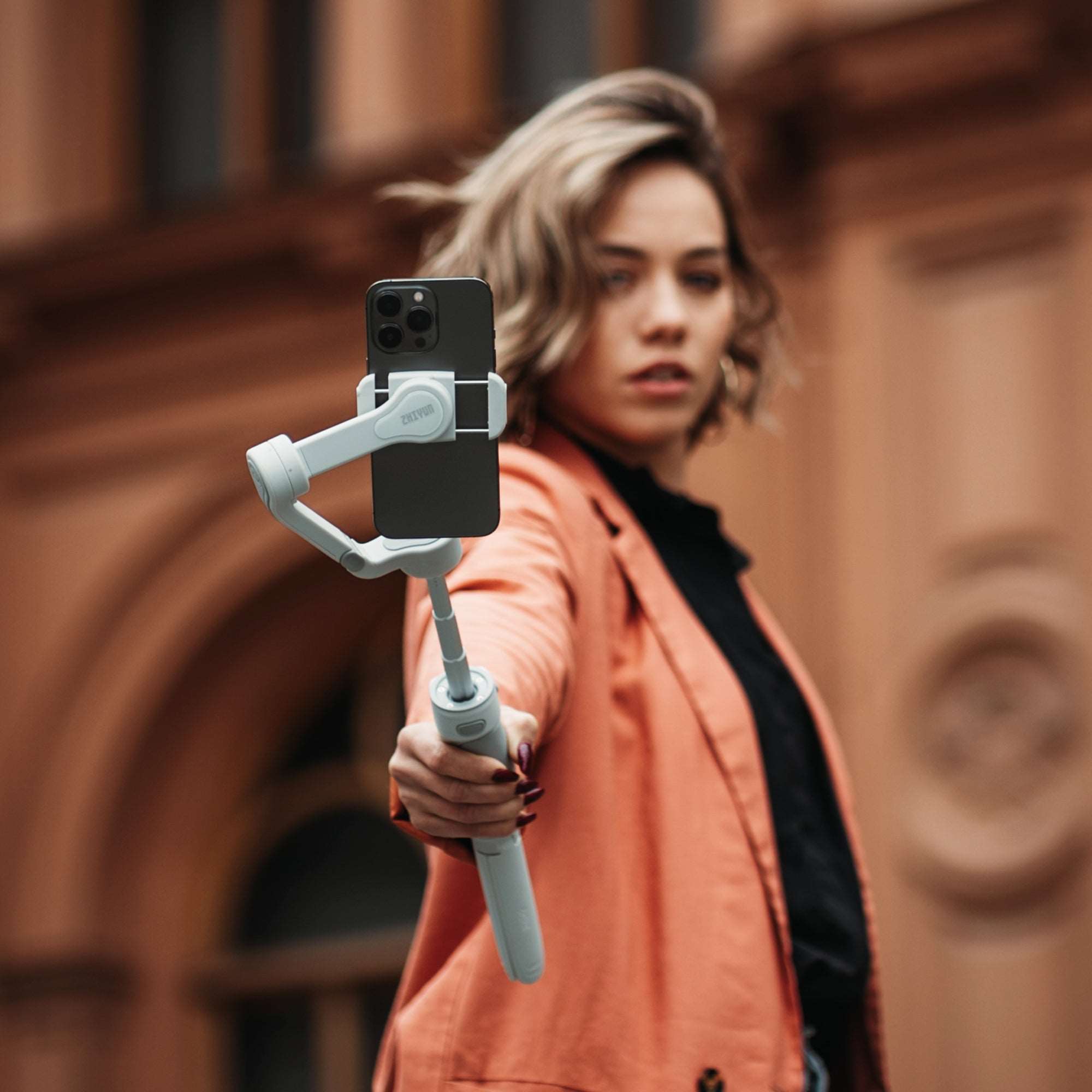
The ZHIYUN Smooth Q5 Ultra is useful for beauty creators who film with smartphones because it combines 3-axis stabilization with AI tracking and a built-in extension rod. For creators filming alone, AI subject tracking helps keep the face centered while applying makeup, turning to show angles, or moving between the vanity and background.

For TikTok and Reels, the extension rod can help capture wider framing without asking another person to hold the phone. This is helpful for outfit-and-makeup transitions, full-face beauty looks, vanity setups, and lifestyle-style beauty content. The phone can move smoothly from product close-ups to face shots, creating a more dynamic edit.
A simple mobile beauty setup can include:
A smartphone mounted on the Smooth Q5 Ultra
A compact key light in front of the creator
A small RGB accent light for the background
A clean mirror or vanity surface
A fixed sitting position for consistent focus
A vertical shooting plan for short-form platforms
When filming short-form makeup content, plan your clips before recording. Capture one clean shot of the bare face, one product flat lay, one close-up application shot, one mid-shot talking segment, and one final reveal. Stable framing makes these clips easier to edit together.
For handheld beauty content, move slowly. Let the gimbal create smooth motion instead of swinging the phone quickly. A slow push-in on the final makeup look or a gentle side movement around the face can make a simple result feel more polished.
The best mobile beauty setup is fast, repeatable, and easy to use. Creators should not spend more time building the setup than creating the content.
Perfect lighting for beauty videos and makeup tutorials comes from balance. The face needs to be bright, soft, and color accurate. Close-up details need enough light for sharp focus. Background lighting should add style without changing the true makeup color. Mobile shots need stabilization so the final video feels clean and professional.
With compact tools such as the ZHIYUN FIVERAY M20C and ZHIYUN Smooth Q5 Ultra, beauty creators can build a flexible content setup for tutorials, product reviews, TikTok clips, Reels, live demos, and everyday makeup videos. The right setup helps the audience see what matters most: real skin tone, clear product texture, smooth application, and a finished look that feels trustworthy on camera.