










Summer Filmmaking Setup Guide for Travel, Vlogging and Outdoor Shoots
Summer production can look simple from the viewer’s perspective: bright locations, open skies, outdoor movement and natural color. For the filmmaker, however, summer introduces several practical challenges.
Strong sunlight can create deep shadows on faces. Long shooting days increase fatigue. Travel limits the amount of equipment that can be carried. Wind affects both audio and camera movement. Indoor locations may be much darker than the outdoor scenes filmed only minutes earlier.
A useful summer filmmaking setup should therefore do three things well:
· Stabilize movement;
· Control or supplement available light;
· Remain practical enough to carry throughout the day.
The Summer Tour Capture event at the ZHIYUN official store runs from July 21 to July 31, 2026, offering selected creator bundles at savings of up to 20%. The following setups are designed to help creators choose equipment by shooting scenario rather than by product category alone.
Lightweight Travel Filmmaking Setup
Travel creators need to move quickly. A location may involve a morning market, a coastal road, a hotel room, a city street and a sunset viewpoint in the same day. A rig that takes too long to prepare often remains in the bag.
A practical travel setup includes:
· One mirrorless camera;
· One versatile wide-to-standard lens;
· A compact gimbal;
· A small microphone;
· ND filters;
· Extra batteries;
· One portable light;
· A lightweight backpack.
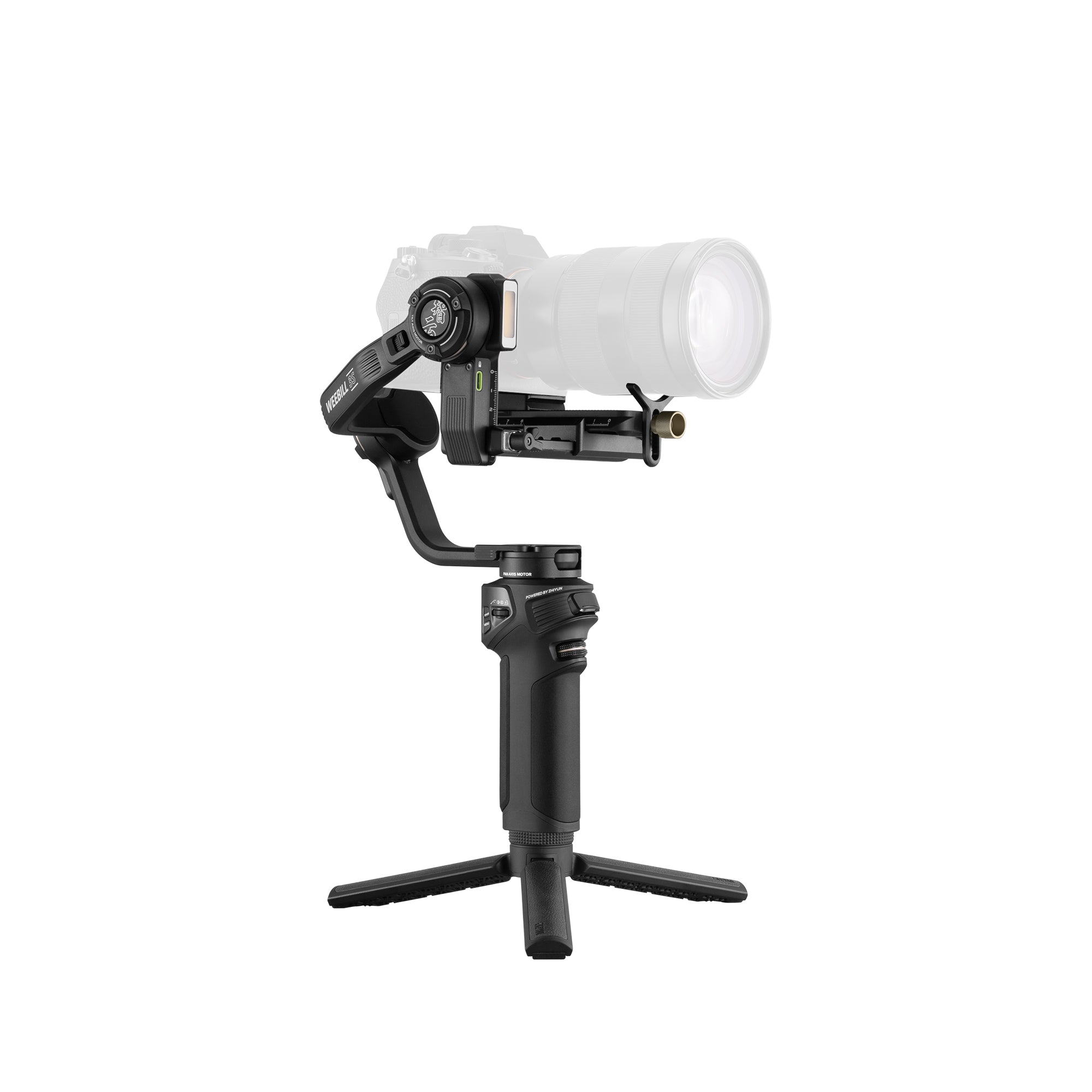
The ZHIYUN WEEBILL 3S Combo fits this type of workflow because it is aimed at compact camera stabilization and mobile shooting. It can support walking introductions, follow shots, low-angle reveals and smooth movement through crowded locations.

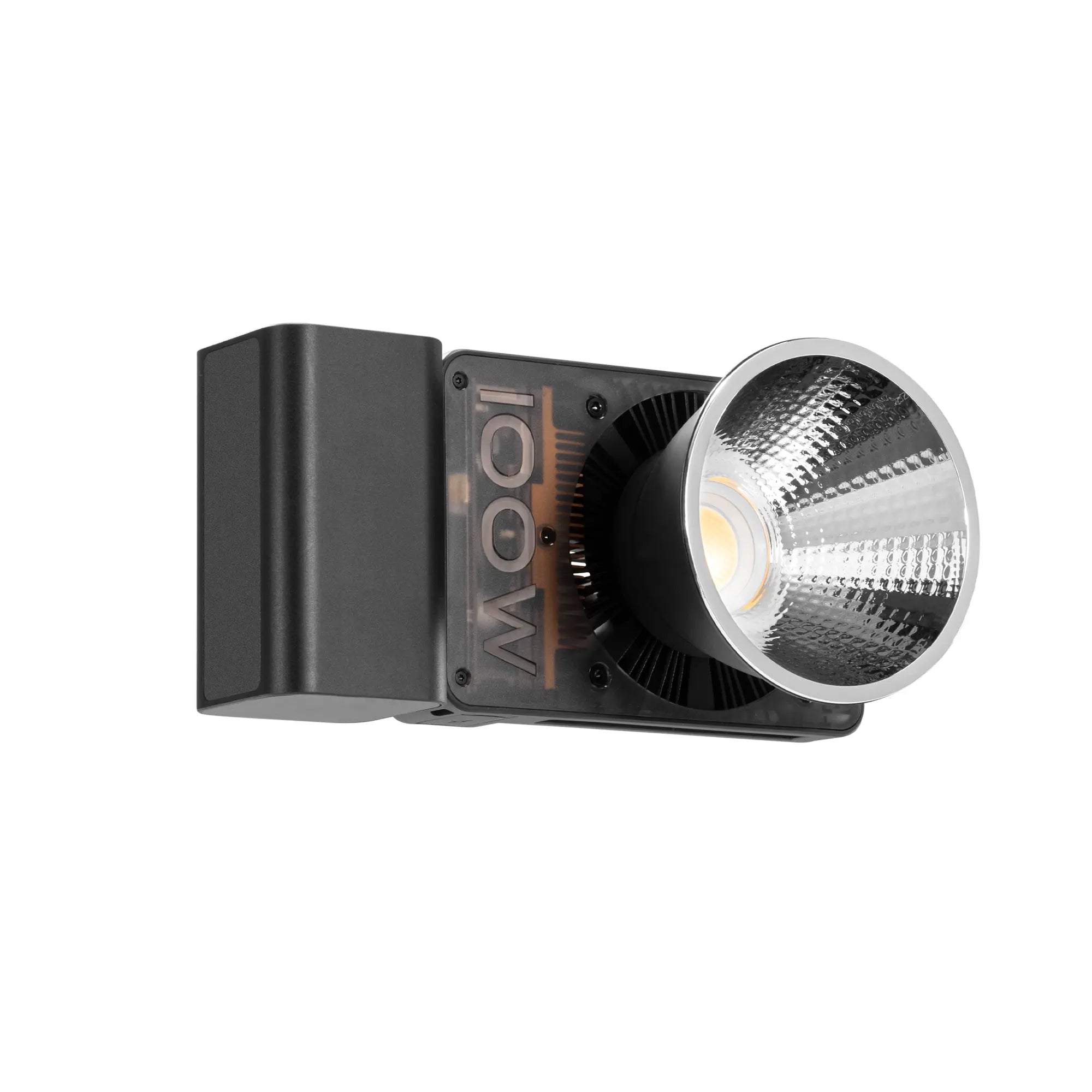
For lighting, the ZHIYUN MOLUS X100 RGB Pro is better matched to creators who need to keep equipment manageable. It can be used for a hotel-room interview, an evening portrait, product details or a colored background accent.

Useful travel shots
· Wide establishing shot of the destination;
· Side tracking shot of the traveler walking;
· Low-angle reveal of a landmark;
· Close-up details of food, signs and local objects;
· Sunset portrait with gentle fill light;
· Short indoor interview or room tour.
The key is not to use the gimbal for every shot. Mix stabilized movement with static compositions and handheld details to create a more natural edit.
Mobile Vlogging Setup for Solo Creators
Not every travel story needs a mirrorless camera. Mobile creators can produce effective short-form content with a smartphone, microphone and compact stabilizer.
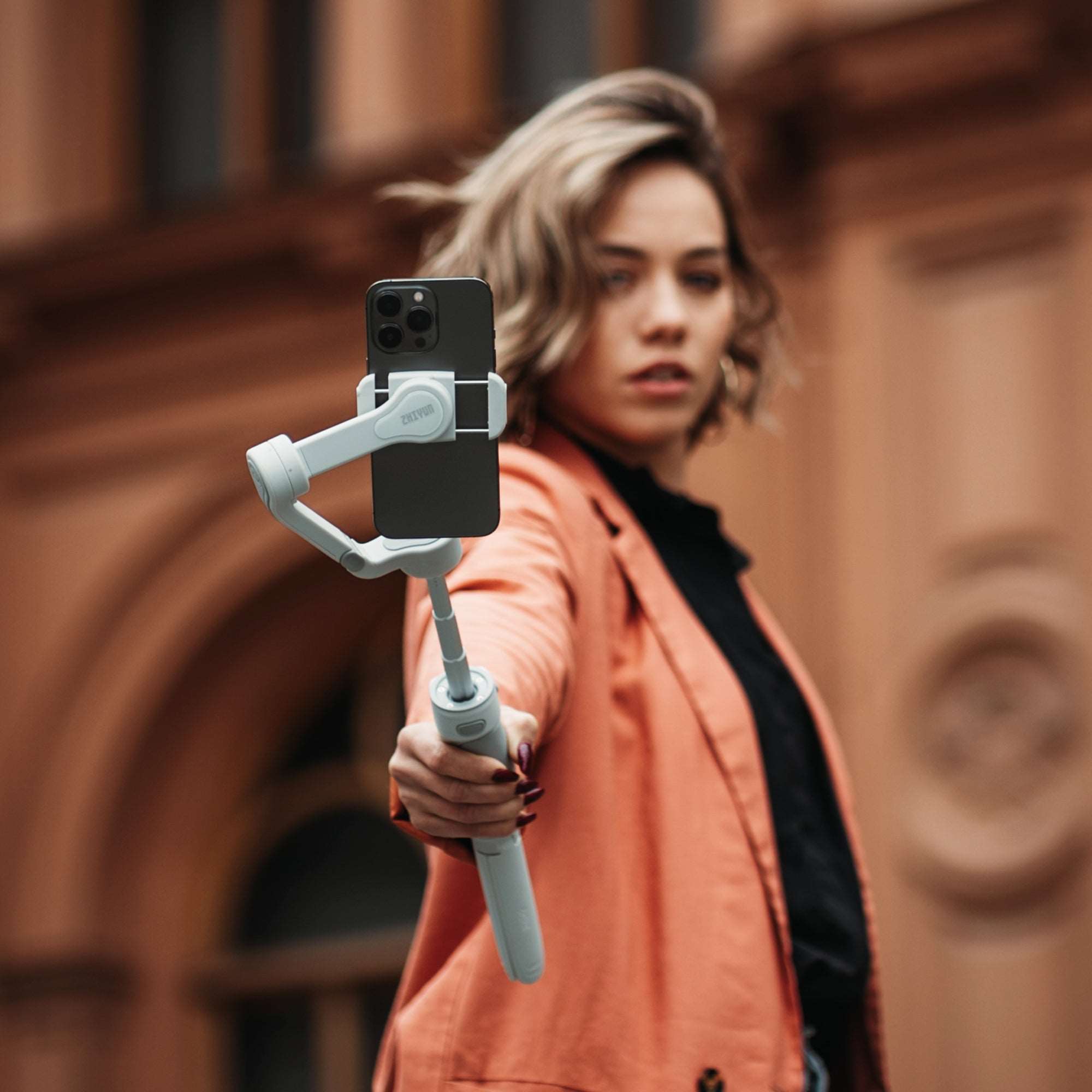
The ZHIYUN Smooth 5S AI Pro is suited to solo recording because AI-assisted tracking can help keep the presenter framed while moving.

A simple mobile setup can cover:
· Walking travel commentary;
· Restaurant and café reviews;
· Hotel and destination tours;
· Fitness or dance clips;
· Product demonstrations;
· Vertical tutorials;
· Family and pet content.
Positioning the phone
For a walking vlog, keep the phone slightly above eye level and avoid holding it too close to the face. A wider composition allows the location to remain visible and gives the tracking system more room to follow movement.
For a static presentation, place the gimbal on a stable surface and leave clear space around the presenter. Avoid bright windows directly behind the subject unless you can balance the exposure.
Improving mobile audio
A stable image cannot compensate for unclear speech. Use a compact wireless microphone when recording in crowded streets, windy locations or large indoor spaces.
Record short ambient sound clips separately. Waves, market noise, traffic, footsteps and café sounds can improve the final edit when mixed underneath voiceover.
Outdoor Portrait and Beach Video Setup
Beach and outdoor portrait shoots combine harsh sun, reflective surfaces, wind and limited access to power.
The best starting point is to schedule key portraits during the earlier morning or later afternoon. Lower sunlight creates softer facial shadows and more dimensional backgrounds.
When filming at midday:
· Place the sun behind or slightly behind the subject;
· Expose carefully for skin and highlights;
· Use a reflector or portable light for facial fill;
· Avoid asking the subject to face directly into bright sun;
· Use an ND filter to maintain suitable video settings;
· Keep light stands weighted or supported in strong wind.
X100 RGB Pro is a practical choice for smaller outdoor portrait setups, especially when the light can be positioned relatively close to the subject. For wider scenes, larger groups or situations requiring more output, a more powerful fixture may be necessary.
RGB should be used selectively outdoors. Natural daylight normally provides the main visual language, while subtle color can be added to a shaded background, vehicle interior or evening setup.
Professional Wedding and Commercial Setup
Professional productions need more flexibility because they often involve larger cameras, longer lenses, additional audio equipment and less opportunity to repeat a moment.
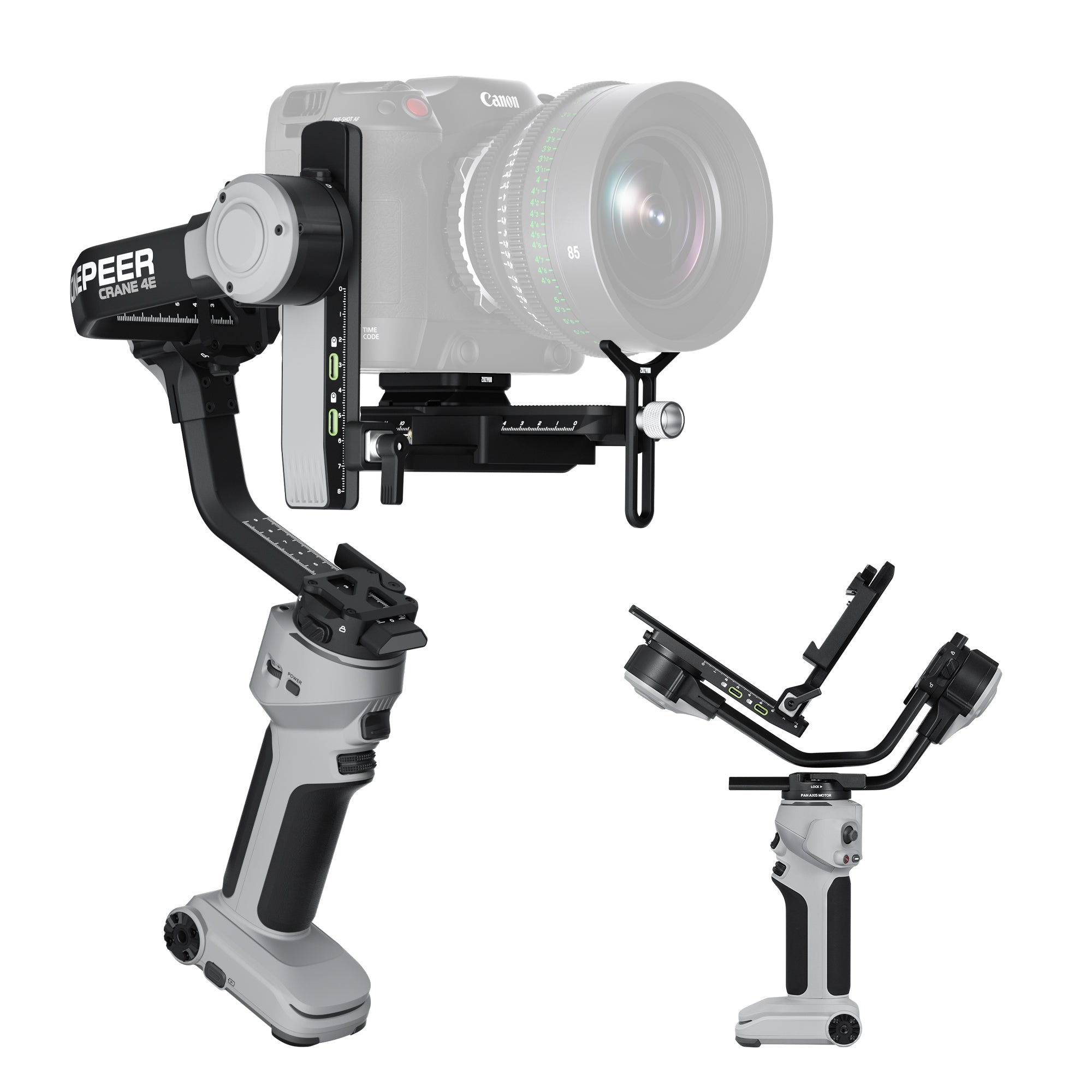
The ZHIYUN CRANE 4 Combo is better suited to these camera configurations. It can support controlled movement during wedding entrances, couple portraits, commercial walk-throughs, performance coverage and branded productions.

A professional summer setup may include:
· Full-frame or cinema-oriented camera;
· Wide, standard and telephoto lenses;
· Camera gimbal;
· Wireless audio;
· External monitor where needed;
· Portable lighting;
· Reflector and diffusion;
· Backup batteries and media;
· Weather and heat protection.
Wedding workflow
Use the gimbal selectively for:
· Venue establishing shots;
· Ceremony entrance;
· Couple walking sequence;
· Reception room reveal;
· First dance movement;
· Short cinematic portrait session.
Do not keep the camera on the gimbal for the entire wedding. Static coverage and longer-lens shots may be better handled with other support methods.
Commercial workflow
Plan movement around the product or message. A gimbal shot should reveal information, follow an action or connect two spaces. Movement added without purpose can make commercial footage feel less precise.
Studio and Location Lighting Setup
Creators often assume summer content is filmed entirely outdoors. In reality, many summer campaigns include indoor interviews, hotel scenes, beauty content, product demonstrations and fashion setups.
The ZHIYUN MOLUS X200 RGB Combo is better suited to more demanding lighting environments where greater output or larger modifiers are required.

One-light interview setup
Place the light approximately 30 to 45 degrees from the subject and slightly above eye level. Use a soft modifier to create gradual facial shadows.
Move the subject away from the background to create depth. If the background is too dark, add a practical lamp or use reflected light rather than flattening the face with direct frontal illumination.
Fashion or full-body setup
A full-body frame requires broader and more even coverage than a head-and-shoulders interview. Increase the distance between the light and subject, use an appropriately sized modifier and check exposure from head to toe.
For creative editorial work, RGB color can be introduced on the background while keeping the main skin-tone light neutral.
Product setup
Use the light to define shape and texture rather than simply increasing brightness. Move the fixture around the product and observe how highlights reveal material, edges and surface detail.
Glossy products often require larger diffusion. Textured products may benefit from more directional side lighting.
Building the Right Camera Gimbal and Video Light Kit
A useful setup does not need every piece of equipment in the catalog. It needs a clear relationship between the camera, movement and light.
|
Shooting Scenario |
Stabilization Direction |
Lighting Direction |
|
Solo mobile vlog |
Smartphone gimbal |
Available light or compact fill |
|
Travel film |
Compact camera gimbal |
Portable RGB light |
|
Wedding production |
Professional camera gimbal |
Venue lighting plus portable fill |
|
Outdoor portrait |
Gimbal for movement shots |
Portable key or fill light |
|
Studio interview |
Static or controlled gimbal movement |
Soft key light |
|
Fashion and commercial video |
Professional stabilization |
Higher-output RGB lighting |
Before buying, build the kit on paper:
1. List your main camera and heaviest lens.
2. Identify the three shots you make most often.
3. Note the locations where lighting usually fails.
4. Decide how much equipment you can realistically carry.
5. Choose one stabilizer and one light that solve those recurring problems.
This prevents the setup from becoming unnecessarily complicated.
Summer Production Checklist
Before leaving for a summer shoot, confirm:
· Camera, gimbal and light batteries are charged;
· Memory cards are formatted and backed up;
· Camera and lens are balanced before arriving;
· ND filters and cleaning cloths are packed;
· Microphones have wind protection;
· Light stands can be secured;
· Equipment is protected from sand, water and heat;
· The vertical and horizontal delivery requirements are confirmed;
· The essential shots are prioritized by time of day.
Summer conditions change quickly. Good preparation gives the creator more freedom to respond when the light, location or subject changes.
Summer Filmmaking FAQs
What is the most important piece of summer filmmaking gear?
It depends on the main problem. A gimbal solves unstable movement, while a portable light solves inconsistent facial and subject illumination.
Should travel creators use a camera or smartphone?
A smartphone is faster and lighter. A mirrorless camera offers more lens and image-control options. Many creators use both for different parts of the same project.
How do I film in harsh midday sunlight?
Use backlight or open shade, protect highlights, add controlled fill and use an ND filter when needed.
Is a 100W light enough for outdoor filming?
It can be effective when placed close to the subject or used in shaded conditions. Larger scenes and stronger ambient light may require more output.
Should every moving shot use a gimbal?
No. Combine gimbal shots with static frames, controlled handheld details and longer-lens coverage for better visual rhythm.
The Summer Tour Capture promotion ends on July 31, 2026. After the event, this guide can remain live as an evergreen summer filming resource by removing the limited-time promotional paragraph while keeping the setup recommendations and production advice.