










Portrait Photography Lighting Guide: Camera, Gimbal & Light Setup for Professional Results
Portrait photography remains one of the most popular genres, yet achieving truly professional outcomes demands precise control over lighting, stability, and composition. Light defines facial structure, texture, and emotional tone, while camera stability ensures sharp stills and fluid video motion—especially critical in today's hybrid photo-video workflows for social media, interviews, cinematic shorts, and branded content.
Modern creators increasingly turn to portable, high-performance tools. Effective lighting sculpts depth and mood, and reliable stabilization enables confident, creative movement. This guide delves into proven lighting setups, equipment choices, and advanced techniques to elevate your portraits in both still and motion formats.
Common Lighting Challenges in Portrait Work
Seasoned photographers frequently face these issues:
- Flat Lighting: A frontal light source minimizes shadows but flattens facial volume and dimensionality.
- Harsh Shadows: Unmodified hard light (direct sun or bare LED) casts unflattering deep shadows under the eyes, nose, and chin.
- Mixed Color Temperatures: Indoor scenes often blend daylight (~5600K) from windows with warmer tungsten (~3200K) or LED sources, resulting in inconsistent skin tones and white balance problems.
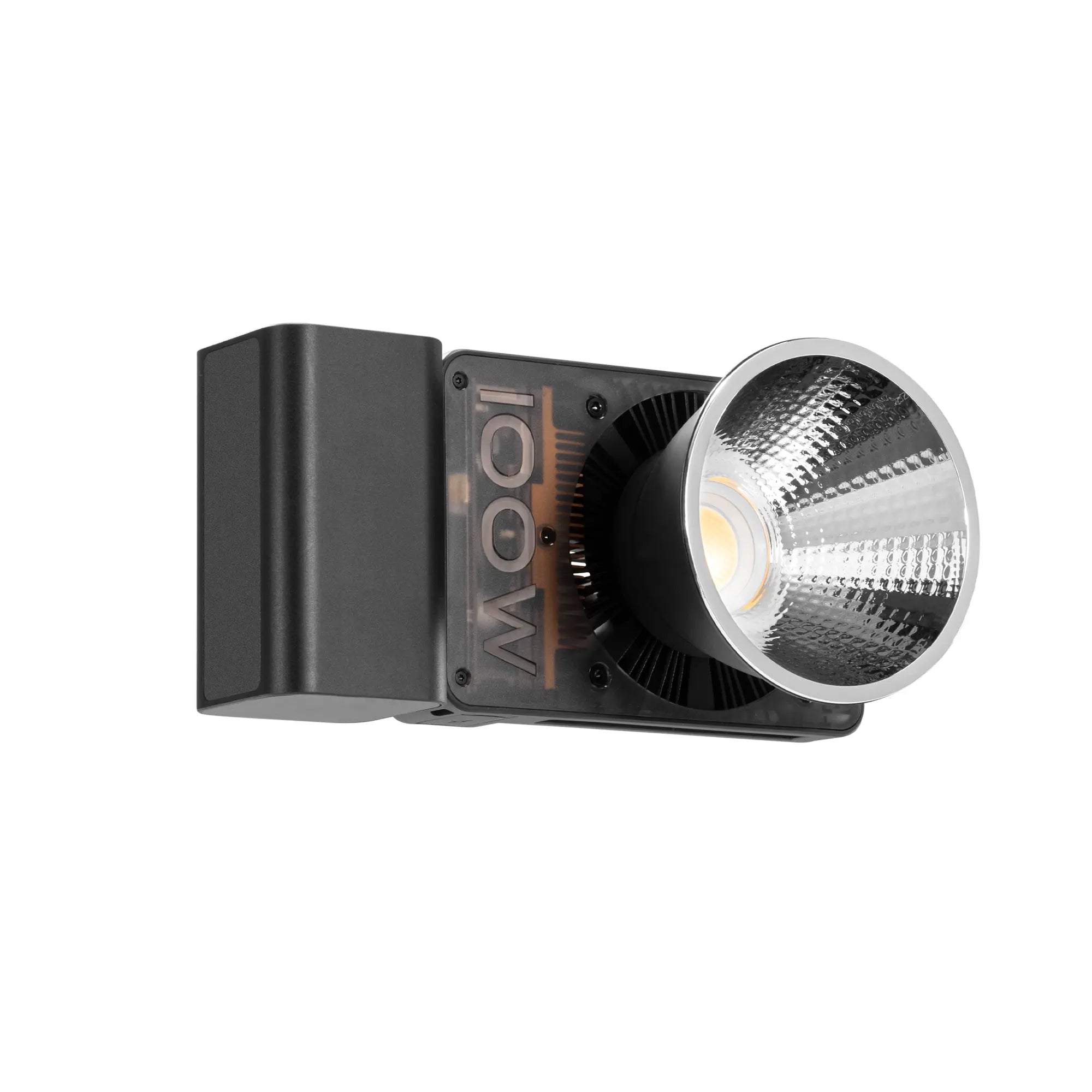
A compact, full-spectrum solution like the Zhiyun Molus X100 RGB—a 100W COB LED with 2500K–10,000K CCT range, CRI ≥95, TLCI ≥97, full RGB/HSI modes, and weighing only 384g—addresses these instantly with precise color temperature adjustment, intensity control, and creative color effects.

Core Principles of Portrait Lighting: The Three-Point System and Variations
The classic three-point setup forms the foundation for most professional portrait work, with refinements tailored to mood and style.
- Key Light The dominant source that establishes form and shadow direction. Position it approximately 45° to the subject's face and 30–45° above eye level to create natural-looking Rembrandt or loop lighting patterns. Use soft modifiers (softbox, octabox, or diffusion) for smooth transitions between highlight and shadow.
- Fill Light Reduces shadow density without erasing it entirely. Place opposite the key light at lower intensity (typically 1/2 to 1/4 of key output). Options include reflectors, lower-power LEDs, or a second light. For dramatic contrast, employ negative fill (black flags or cards) instead of adding light.
- Rim Light (Backlight/Hair Light) Placed behind or slightly to the side, it creates separation from the background, highlights hair edges, and adds depth. In cinematic video portraits, rim lights often use cooler tones or complementary colors for visual pop.
Practical Indoor Portrait Lighting Setup
Controlled indoor environments allow maximum precision. A reliable configuration includes:
1. Key light: Zhiyun Molus X100 RGB + softbox, positioned at 45° and slightly above eye level, set to 5500K neutral daylight for accurate skin rendering.
2. Fill light: Reflector panel or Molus X100 RGB at 30–50% output on the opposite side.
3. Rim/background light: Molus X100 RGB adjusted to cooler CCT (6500K+) or subtle RGB accent (soft blue/purple) for edge glow and atmospheric separation.
This setup excels for:
- YouTube-style talking-head videos
- Influencer and headshot portraits
- Professional interview footage
Outdoor Portrait Lighting Strategies
Natural light offers beauty but demands adaptation.
- Golden Hour Priority: Shoot during the hour after sunrise or before sunset for warm, directional side light (~3000–4000K) that flatters skin and creates soft shadows. Pair with ND filters if needed to maintain wide apertures.
- Shade or Overcast Fill: In flat or contrasty conditions, deploy the Zhiyun Molus X100 RGB as portable fill or supplemental key light. Its wide 2500K–10,000K range matches ambient conditions seamlessly, restoring facial detail and three-dimensionality while remaining backpack-friendly.
The Critical Role of Stabilization in Portrait Video
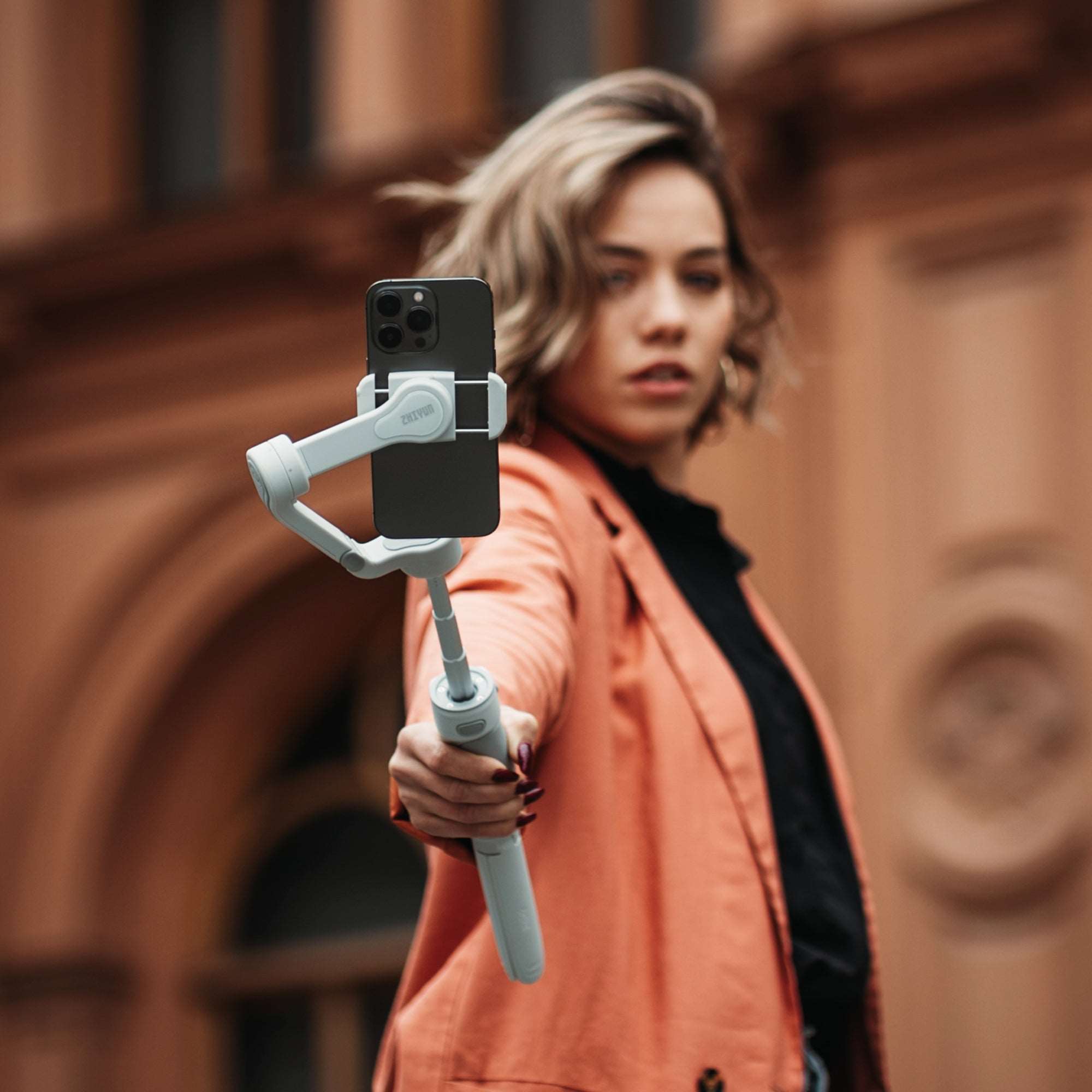
Portrait creation now frequently includes motion: cinematic clips, vertical Reels/TikTok content, and dynamic interviews. Even minor shake disrupts immersion and professionalism.
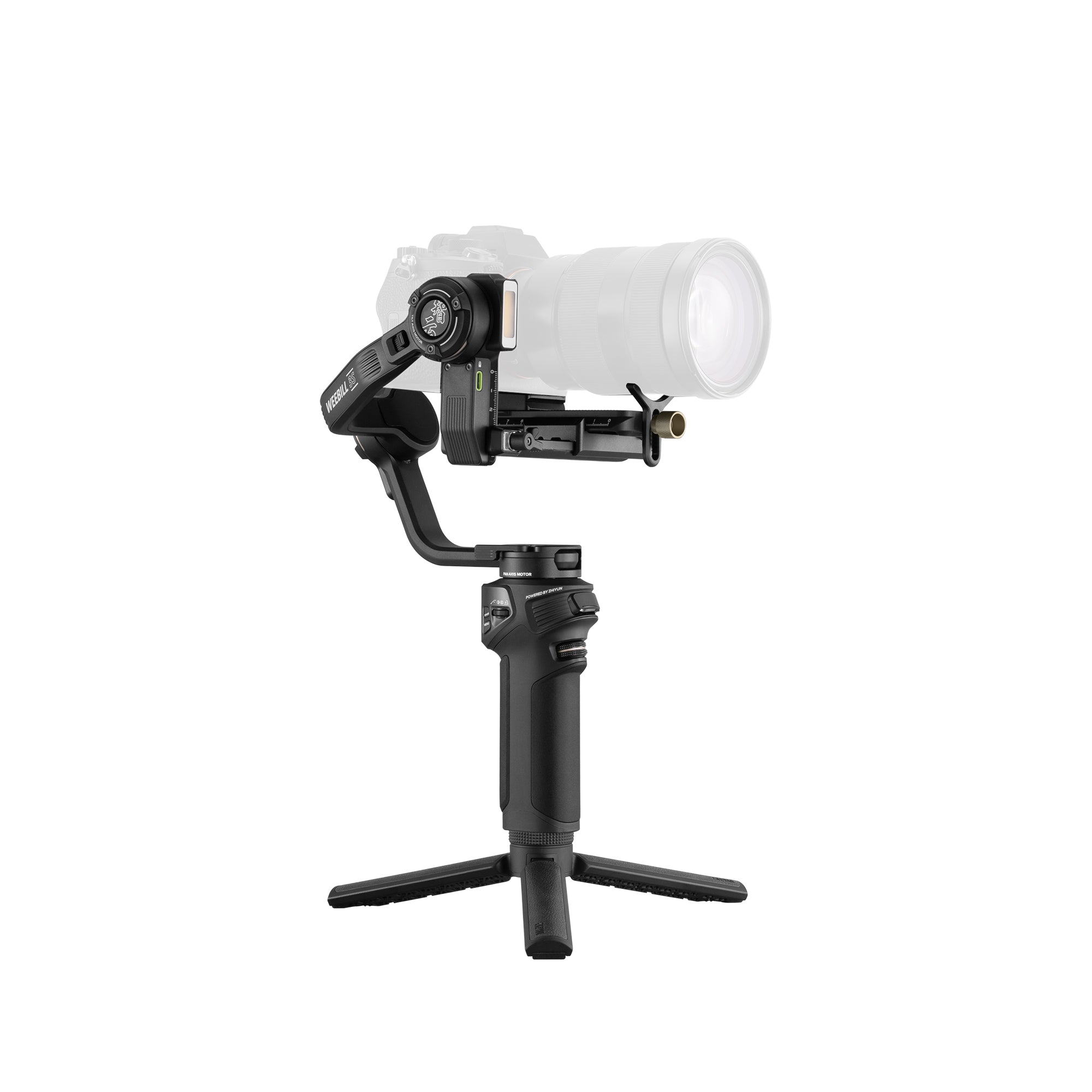
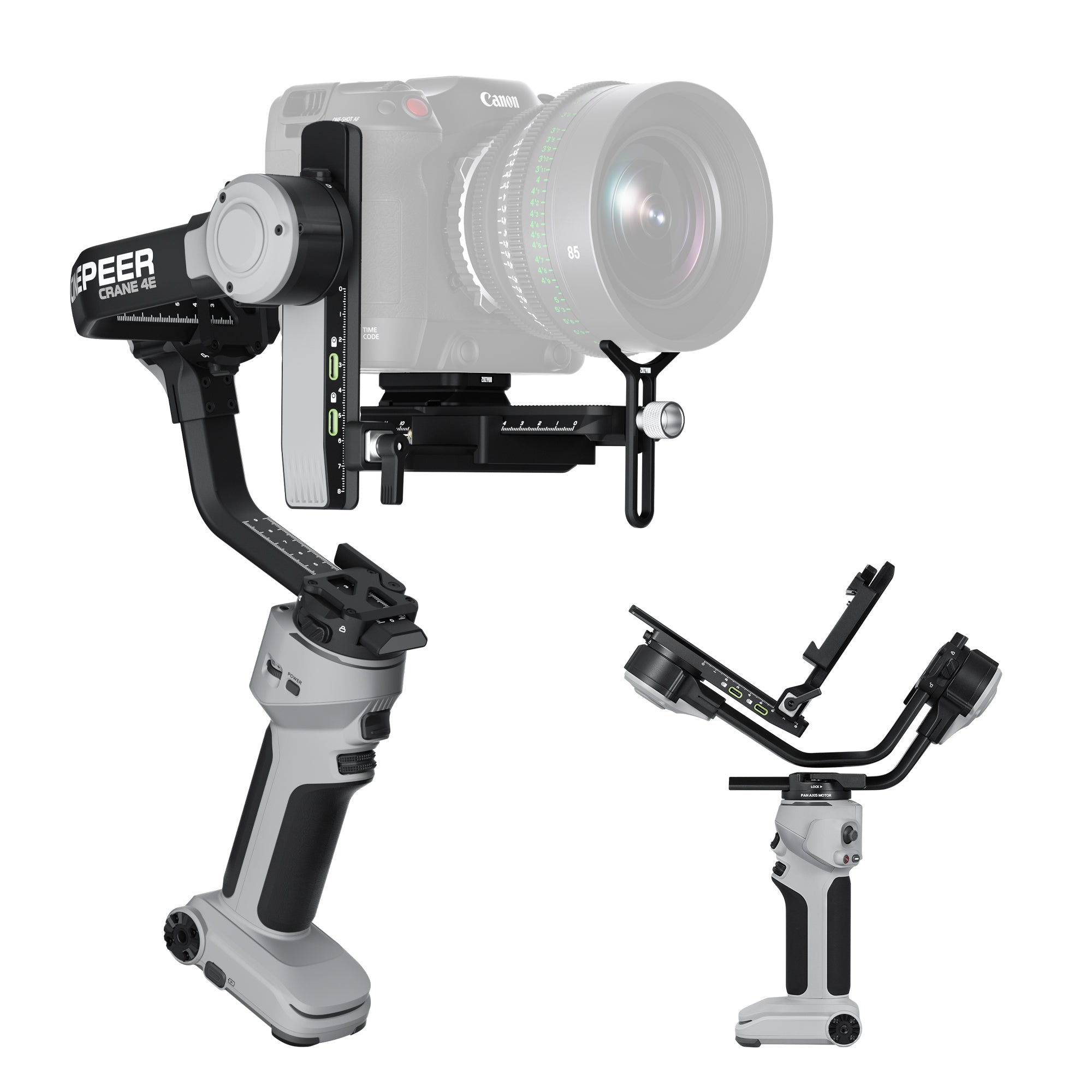
Zhiyun Crane series gimbals (such as Crane 4 or Crane M3S) deliver three-axis stabilization for mirrorless/DSLR payloads, supporting smooth pans, tilts, tracking shots, and effortless horizontal-to-vertical transitions—ideal for portrait-oriented video. 
Key advantages:
- Fluid subject tracking without visible jitter
- Consistent framing during movement
- Cinematic techniques like push-ins, reveals, and subtle Dutch angles
Advanced Composition Techniques Integrated with Lighting
Lighting and framing must work in harmony for impactful portraits:
- Rule of Thirds + Leading Lines: Position eyes along upper-third intersections; align key light direction to guide viewer gaze.
- Shallow Depth of Field (f/1.4–f/2.8) + Rim Light: Isolate the subject while emphasizing separation.
- Layered Foreground Elements: Incorporate subtle foreground (plants, hands) combined with rim light for added depth and dimension. Stabilized gimbals free you to refine these elements without fighting camera shake.
Common Professional-Level Mistakes to Avoid
- Key light positioned too high (>60°): Creates unflattering “raccoon eyes” shadows in the sockets.
- Inconsistent color temperatures: Leads to patchy skin tones—always match sources precisely (use the Molus X100 RGB's wide CCT for quick correction).
- Overly aggressive fill: Eliminates mood and dimensionality (keep fill at 1/4–1/2 key intensity).
- Neglecting rim light: Results in the subject merging into the background.
- Incorrect light distance: Too far reduces quality and fall-off control; too close creates hotspots (start key at 1–1.5m, adjust per modifier).
Conclusion
Masterful portrait photography balances technical accuracy with artistic intent. By commanding three-point lighting variations, light ratios, color fidelity, and precise stabilization, you can produce compelling results across environments and formats.
For versatile creators seeking portability without compromise, the Zhiyun Molus X100 RGB (palm-sized 100W powerhouse with exceptional color accuracy and full creative modes) paired with a Crane series gimbal forms a lightweight, professional-grade ecosystem—perfect for bridging high-end portrait stills and engaging video content.