News

What are The Best Mobile Stabilizers Out There?

Dec 04, 2022
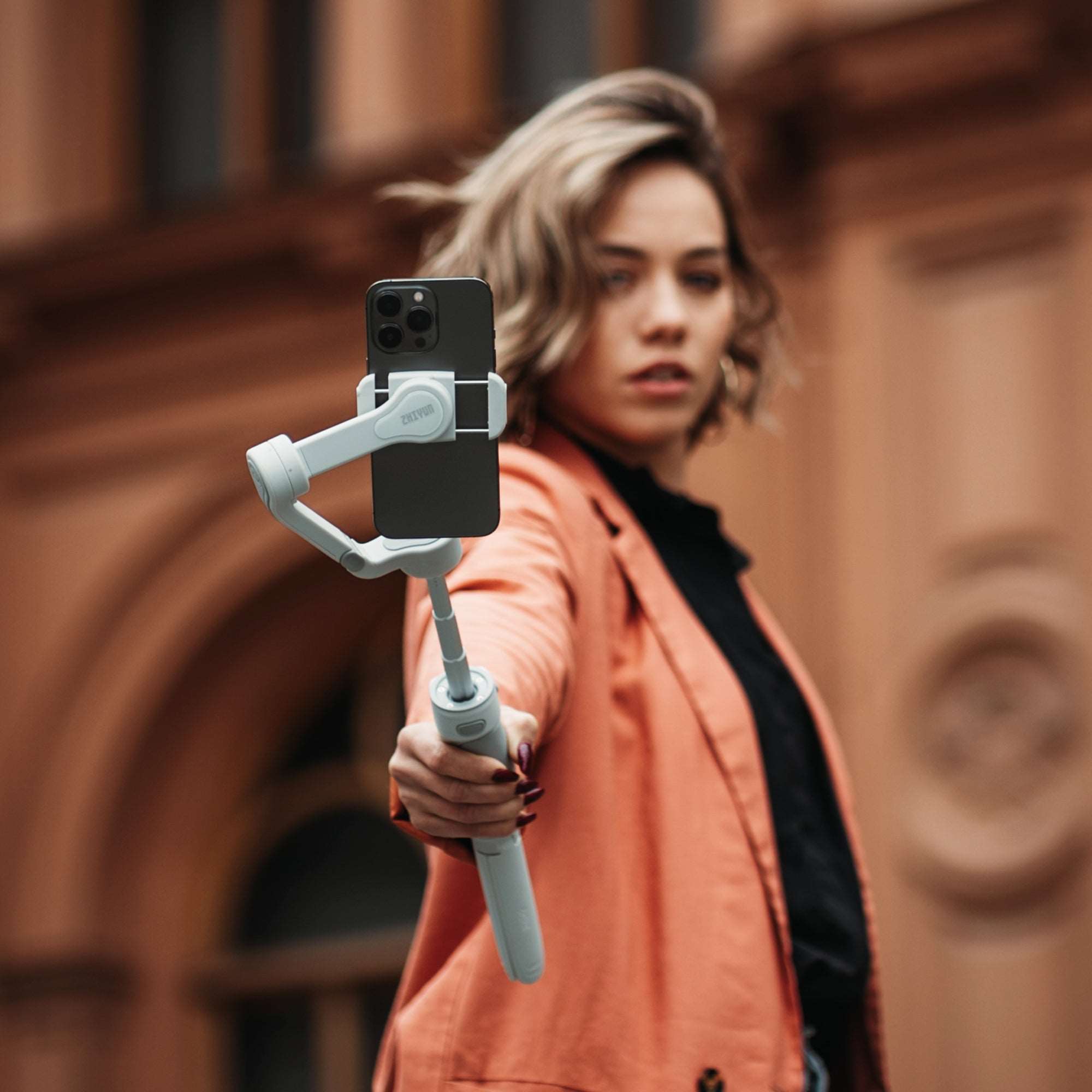
In the past if you wanted to shoot or film a high-quality photo or video, you would need to buy a professional camera to fulfil your filming needs. However, throughout the years, cameras on phones have improved significantly in quality and while still not as good as an actual camera, they are more than enough to take high quality photos and videos. While the phones themselves have built in stabilizing technology, this is done by cropping the footage in a certain way and it can cause the image to not look as good or as intended. This is where a mobile stabilizer comes in, like a camera stabilizer, a mobile stabilizer steadies your phone by counteracting on any unwanted movements to allow you to take steady, clear photos and videos. If you are someone who loves posting content on social media or just a photography enthusiast, a mobile stabilizer is an important tool to have to help you go the extra way to take high quality photos and videos. In this article we will be looking at some of the best mobile stabilizers currently available on the market made by the company ZHIYUN.       About ZHIYUN ZHIYUN is a pioneer and NO.1 brand in the gimbal market, whose audience ranges from professionals in the film and TV industry, independent video production studios to general consumers. While ZHIYUN’s main products are camera stabilizers, they also have created numerous of the best mobile stabilizers on the market. They are dedicated in igniting the passion and imagination of every filmmaker through their creation and innovation of phone and camera stabilizers. With over 5 million camera stabilizers sold worldwide, 8 years of innovation and revolutionizing the mobile stabilizers market, and multiple product awards. It hopes to co-create with all photographers and videographers to push boundaries of video creation further than ever before. Now let’s look below at some of the best mobile stabilizers which they have to offer.   The Smooth 5 and Smooth 5S The ZHIYUN Smooth 5 will be everything you love about filming with your smartphone. The 3-axis design allows movements in all angles to be amazingly smooth, even in extreme angles. You can attach a magnetic fill light for 360° all around lighting on both sides of the new phone clamp, you can enjoy outstanding lighting backed by the 5300K-5700K color temperature. Also, you can change the colors using the light filters. All your movements and operations are just within your fingertips. The Round-cap joystick, optimized control panel and adjustment wheel provide a better experience for users to check and adjust gimbal status while changing camera parameters on the fly. An intuitive control panel partnering with ZY Cami makes every shot and a go to choice for a phone stabilizer if you are moving toward the professional level.       The Smooth 5S was just released in November as an upgraded version of the Smooth 5. With the same amazing functions, the Smooth 5S comes in with a built-in fill light along with its magnetic fill light attachment areas improving the lighting, allowing you to take clear photos at night and dark areas. Just like the Smooth 5, the Smooth 5S has the SmartFollow technology allowing you to focus and follow a specific target, always keeping it in the spotlight. Backed by a 2600mAh battery, Smooth 5 and Smooth 5S can work up to 12 hours (tested with the gimbal fully balanced). With a charge time of around 2 hours. The Smooth 5 and the Smooth 5S are both well rounded mobile stabilizers and a perfect choice for entry-level to filming professionally.       The Smooth Q4 The Smooth Q4 is the newest iteration of the Smooth Q series of mobile stabilizers. It provides an ideal solution for filming with smartphones. The brand new foldable design makes it even more compact compared with the Smooth Q3. With a 215mm extendable rod built in, SMOOTH-Q4 allows you to shoot at various angles from a wider background. You can control it easily with one hand as one-hand operation becomes simpler with the multi-functional control wheel. Simply press to adjust the brightness and slide to adjust the focal length just at your fingertips. It supports Smart follow, Timelapse, Slow motion shooting, and many more with its ZY CAMI app. The Smooth Q4 is a great mobile stabilizer if you are still looking for professional function, but would like something a bit more compact and easy to carry.       The Smooth X If you are someone that love taking professional photos and videos, but you are on a budget, the Smooth X is a great choice of a mobile stabilizer to consider. The SMOOTH-X is a stylish palm-sized foldable 2-axis gimbal for smartphone that weighs only 246g and easily fits to pack into a pocket. It has an aluminum built-in extension rod can be extended up to 260mm, which makes Smooth X a great tool for group selfie and helps you capture the shot of that perfect angle. You are also able to switch horizontal into portrait mode with just one click! With intelligent tracking, gesture control, and simple connection to your phone via Bluetooth. The Smooth X is a mobile stabilizer that is extremely compact, simple and easy to use, and perfect for beginner photographer and videographers!       Conclusion Mobile stabilizers have been slowly catching up to professional cameras in capture quality over the years. With social media being so prominent and technology being so advanced, everyone with a smart phone can produce high quality professional shots just by using their phone. However, with limited control over subtle movements, you still need a mobile stabilizer to make sure your photos and videos are perfect! With so many different mobile stabilizers available on the market, making the correct choice for yourself can be extremely hard, as they vary in prices, design, and function. We hope that after reading this article today, you have a better idea in your mind of which mobile stabilizer is best suited for you! ZHIYUN is one of the absolute best in the industry when it comes to producing mobile stabilizers. The mobile stabilizers we looked at today are just some of the great products they have created to allow photographers make their creative visions come to life! Feel free to check their website to find out more about prices and different photography or filmmaking related products! Thank you for reading.

What are The Best Camera Stabilizers on the Market?

Nov 25, 2022
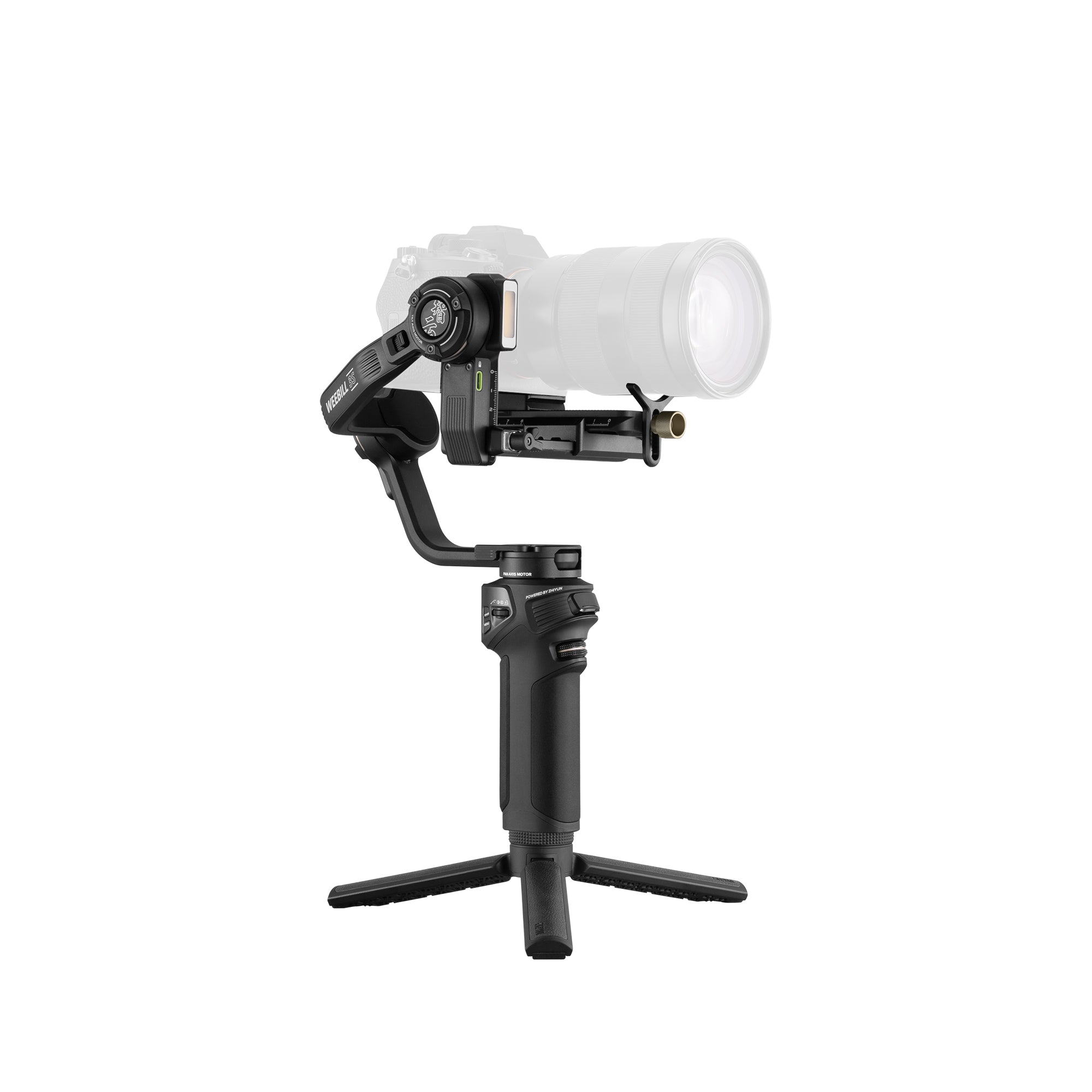
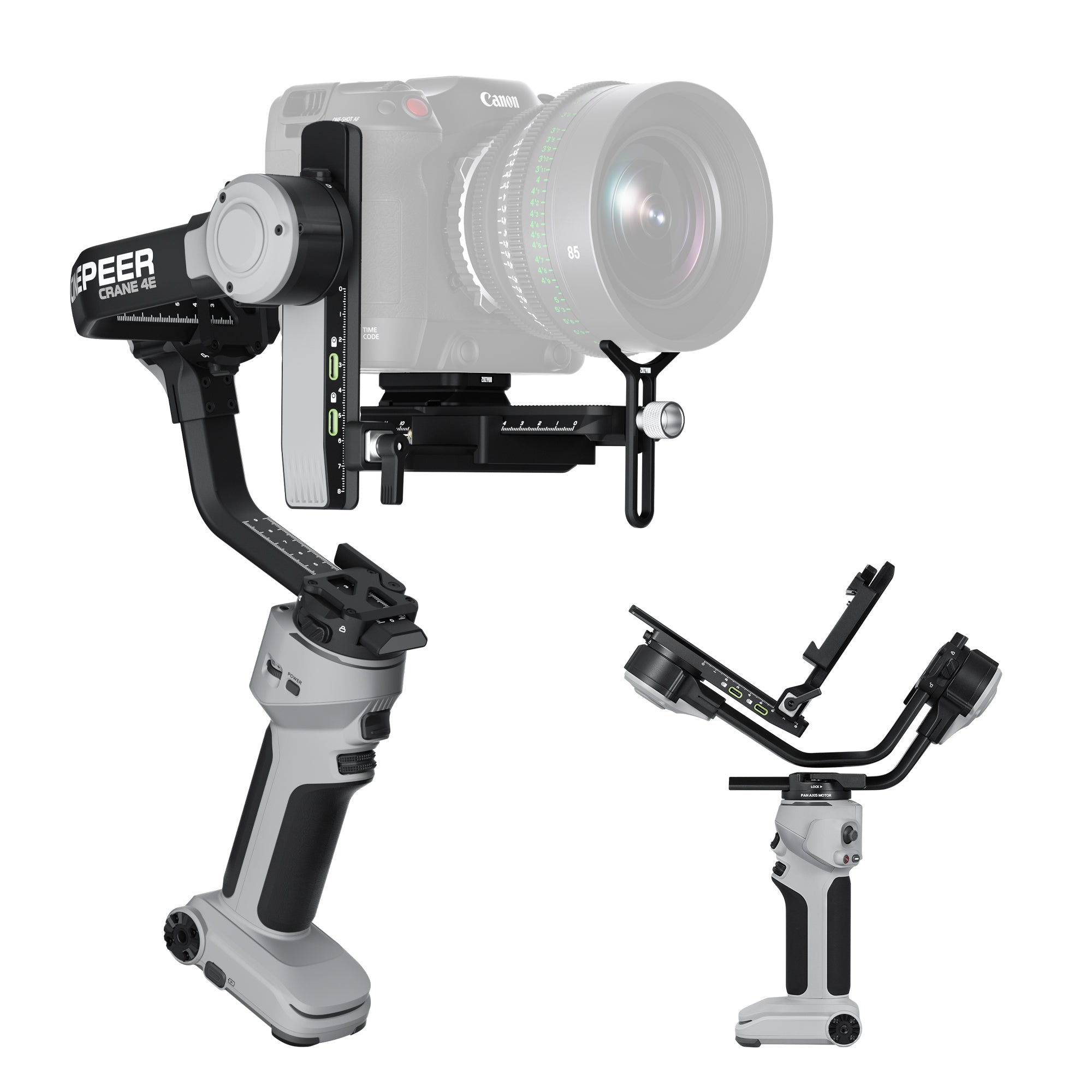
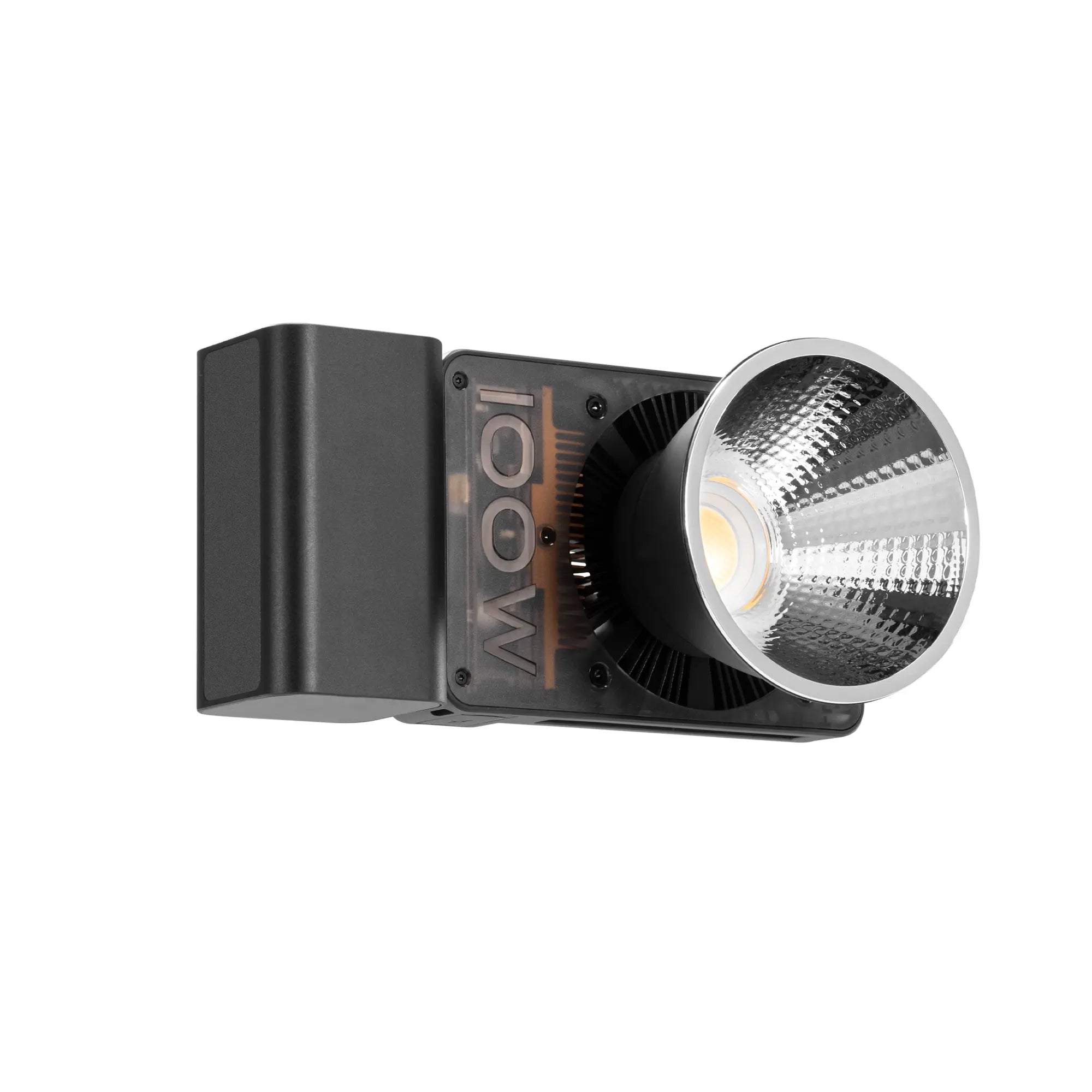
Camera stabilizers are one of the most useful tools in the modern day when it comes to videography and photography. One of the most direct ways of improving the quality of your shots, is by making sure that the photos or videos that you take are clear, smooth, and stable. Unless you are purposely trying to take a blurry looking photo, being able to take clear and stable photos is expected out of a good photographer. Back in the day, stable photos relied solely on the photographer’s ability to hold the camera still, however as technology has advanced, we now have tools that are able to assist us in taking smoother photos. However, with so many different brands on the market, all with different designs, functions, and prices, it can be hard to be able to make the right purchase for you. In this article we will be looking at a few of the best camera stabilizers available currently on the market made by ZHIYUN.     About ZHIYUN ZHIYUN is a pioneer and NO.1 brand in the gimbal market, whose audience ranges from professionals in the film and TV industry, independent video production studios to general consumers. ZHIYUN is earnestly committed to its customers. Its dedication to R&D and its innovative gimbal product range ignite the passion and imagination of every filmmaker. With over 5 million camera stabilizers sold worldwide, 8 years of innovation releasing revolutionizing the camera stabilizers market, and multiple product awards. It hopes to co-create with audience to push boundaries of video creation further than ever before. Now let’s look below at some of the best camera stabilizers on the market that ZHIYUN has to offer.   The Crane M3 As tiny as a bottle of water, the Crane M3 is known for being “tinier but no less mighty”. Compatible with smartphones, action cameras, compact cameras, and full-frame mirrorless cameras with certain lenses (Accessory mount is required for smartphones and action cameras). An industry-first appearance design. Crane M3 ushers in appearance with fashionable white color. An ergonomic grip handle and comfortable material also better fits your palm. It has a built-in LED fill light with Lumen Amplifier technology for reducing image noise. Shooting in dark or dim light is favored by the adjustable color temperature and brightness, which sharpens the image. It can connect to an external microphone for better sound captures, and it is extremely easy to control. Find the buttons, wheels and the newly added round joystick at your comfort reach with the ergonomic control panel. Supports adjustment on aperture, shutter, ISO and roll axis. The Crane M3 is an overall extremely powerful, but extremely portable camera stabilizer.     The Weebil S The Weebil S is known for its super compatibility. It comes with new motor units and an upgraded high-precision algorithm. Combos like Sony A7Ⅲ+FE 24-70mm F2.8 and Canon 5D4+EF 24-70mm F2.8 can be perfectly balanced and stabilized on Weebill S for smooth cinematic shots under different scenarios. The upgraded 8th Instune algorithm provides high responsiveness and diminishes jittery in fast movement in any environment, increasing its responsiveness by 50% and 300% more motor torque! Moreover, you can quickly adjust the speed and various parameters of each axis directly through the dial on the handle itself, giving you more responsive and flexible control than ever! Other than its compatibility and supreme power, the Weebil S is known for its extremely compact design. The unique structure and minimum design of Weebill S make it super compact as a piece of A4 paper. With the ergonomically designed Sling mode, Weebill S provides an effortless shooting experience for anyone. It has instant preset settings, an upgraded transmission module for professional monitoring and livestreaming, automatic tuning to your cameras weight, and so much more!     The Crane 3S If you are a professional videographer, or a filmmaker and you need a camera stabilizer that is able to work in a strict professional environment, then the Crane 3S is for you. The CRANE 3S is constructed with brand new SUPER motors which allow for a 6.5kg/14.3lb payload for a wide range of camera models including Canon EOS 1DX, BMPCC 4k/6k, and even Canon Cinema EOS, Sony FS & FX series, and Red Digital Cinema Cameras. To facilitate powerful features in various shooting environments, this camera stabilizer is driven by a new algorithm system that enables phenomenal responsive speed and smoothness. In fast action shoots, it can resist high winds and G-forces without compromise. The Crane 3S is a camera stabilizer that was designed by bearing filmmakers’ needs in mind. From intense chasing shoot to studio filming, different types of shooting environment require both high capacity and flexibility of shooting equipment. ZHIYUN felt the Crane series can be even better to adapt to strict and unpredictable filming environment. This is a camera stabilizer for photographers with the strictest requirements!     The Weebil 3 The Weebil 3 is the newest camera stabilizer released by ZHIYUN of the Weebil Series. Continuing its compact design, weighing in at only 2.49 pounds, the Weebil 3 comes with a new sling and wrist rest saving you 40% more energy filming with it! The restructured L-shape handle, combined with an ergonomic wrist rest and a repositioned extendable sling grip. The L-shaped body moves the weight downwards to improve the stability when you pan or shoot at a low angle. Furthermore, with its 10th generation algorithm precisely removes subtle shakes in footage by re-tuning the running curves based on practical data, delivering a revolutionary stable performance. With a built-in fill light and a noise cancelling Hi-Fi microphone, the Weebil 3 is a continuation of the successful compact design created by ZHIYUN. Effortless filmmaking starts from here.     Conclusion There is a plethora of different camera stabilizers on the market, it can be hard to choose as each are designed differently but all have the same aim and main function. Hopefully after this article today, you have a better idea of which camera stabilizer is more suitable for you! ZHIYUN is one of the absolute best in the industry when it comes to designing and creating camera stabilizers, the products introduced today are just some of the amazing products they create, feel free to check their website to find out more about prices and different photography or filmmaking related products! Thank you for reading.

What Makes a Good Camera Stabilizer?

Nov 18, 2022
When filming videos, making a movie, or plainly taking photos, being able to take smooth and stable shots are the go-to way to increase the quality of your work. Unless you are trying to purposely take a photo with a blur effect, the ability to take clear and stable photos is a standard that is expected out of a good photographer. As technology has advanced through time, cameras are getting more and more advanced, being able to take higher quality shots with greater clarity. Some even have started to develop to come with anti-shaking technology within the programming, however this feature isn’t always enough for some scenarios. This is when special camera appliances come in to help assist a photographer or film maker to take their shots to the next level. In the case for steadying shots, having a good camera stabilizer is the way to go. In this article we will look at how do video camera stabilizers work and what makes up a good one. What is a Camera Stabilizer? A camera stabilizer is a device or rig that assists you in stabilizing your camera during photography. These devices help you make your shots look more professional by eliminating and undesired movements when holding your camera.     How do Camera Stabilizers Work? While there are multiple different types of camera stabilizers, all of them work with the same basic principles. A camera stabilizer stabilizes your shot by having the stabilizers weight counteract with any unwanted motion from to camera to a achieve a stable and smooth image or video. Although camera stabilizing technology is relatively new (the first camera stabilizer was invented in around the 1990s), throughout the years there have been significant changes and improvements made to the device. While originally a classic camera stabilizer used a pole and moveable weights at the bottom to act as a gyroscope to balance out any shaky movement from holding the camera. These rigs used to be relatively big and clunky, however in the recent years, newer, light, more compact, and more sophisticated models have been created and put out onto the market.  When do You Use a Camera Stabilizer? There are multiple different scenarios in which you can use a Camera stabilizer, however they usually always surround being used when you want to film something while moving, or when you want to take stable and clear photos. Further in this article below we will be looking at some common scenarios when it might be best to be use a camera stabilizer. Filming in Motion: When filming a moving target or trying to film while walking, it can be extremely hard to keep your camera stable. You either need to really focus on the camera and try to keep it in a stationary position or you may need to watch where you are moving to. This however usually results in videos or film that has some unwanted wobbles or movement due to it being extremely hard the camera neutral with your hands. A good camera stabilizer resolves this issue perfectly by counterbalancing any unwanted motion, allowing you to be able to focus on where you are going and what you are filming without having to worry about whether the camera is stabilized or not. This is perfect for when trying to follow a certain target like filming while walking or trying to take photos on the move.     Taking Stable and Clear Shots: When you try to shoot a video or photo even when standing still, there will be some unwanted movements from your hands as it is impossible as humans to keep something perfectly still. By using a camera stabilizer, you are taking this factor out of the equation for your photography, which allows you to only worry about if you are capturing everything that you visioned in your shot. When using a camera stabilizer, your photos and videos will appear clearer and smoother as there won’t be any extra motion at all. A good camera stabilizer is perfect for shooting wide view photos or videos where you need to move the camera from point A to point B.     Taking Picture from Angles that Can’t be Normally Taken: Camera stabilizers are amazing devices for allowing you to take pictures from angles in which you usually would be unable to do with just your bare hands. The range of motion of our arms are limited, which restrict us from taking photos in certain angles. This makes it extremely hard to take shots from extremely low or high angles, but by having a camera stabilizer, this issue is fixed as you usually can control the position of your camera on a video camera stabilizer, which allows you to take photos from angles which would have been not possible with just our bare hands. Good camera stabilizers open numerous of possibilities by opening more possibilities for shots that we can take. Introducing the ZHIYUN Crane 2S and Crane 3S Camera Stabilizers In this article we have looked at how camera stabilizers work, and some of the scenarios a good camera stabilizer is perfect for. Some readers may now start to wonder what some good camera stabilizers are on the market. Camera stabilizers can be hard to choose as they are relatively pricey, and there are so many different camera stabilizers to choose from. In this article, we will be introducing two of the best camera stabilizers that you can buy to bring your photography to a new level. The ZHIYUN Crane 2S and Crane 3S. Crane 2S: Highly optimized in motor control algorithms and motor power, the Crane 2S handles large cameras such as the BMPCC 6K, Panasonic S1H, and EOS 1DX Mark III with total ease. More than that, you can also mount multiple accessories on it and shoot vertically! Crane 2S is pushing boundaries not just in terms of loading performance, but also with its film-grade focus control ability. With its upgraded built-in focus controller and servo follow focuses that feature ultra-low delay and high precision, you will never miss any decisive shots. It is easy to switch between modes, with 12 hours of battery run time, digital & mechanical focus control, standard & vertical mounting plates, and a 9th instune high axis response algorithm. The Crane 2S is a powerhouse of a camera stabilizer perfect for those that require a rig that can support large cameras.     Crane 3S: From intense chasing shoots to studio filming, different types of shooting environment require both high capacity and flexibility of shooting equipment. Bearing filmmakers in mind, ZHIYUN felt the Crane series can be even better to adapt to strict and unpredictable filming environment. Introducing the new CRANE 3S, the legendary gimbal built on a heritage of innovation with magnificent motors and brand-new modular design, which aims for wider application and intuitive control. The CRANE 3S is constructed with brand new SUPER motors which allow for a 6.5kg/14.3lb payload for a wide range of camera models including Canon EOS 1DX, BMPCC 4k/6k, and even Canon Cinema EOS, Sony FS & FX series, and Red Digital Cinema Cameras. It is driven by a new algorithm system that enables phenomenal responsive speed and smoothness. In fast action shoot, CRANE 3S can resist high winds and G-forces without compromise. The Crane 3S truly is a revolutionary and innovative camera stabilizer that is perfect for film makers or photographers that need a top tier professional filming rig.     Conclusion: In this article, we went through and discussed how a camera stabilizer worked, looked at some of the use scenarios for a good camera stabilizer, and looked at 2 of the best camera stabilizers on the market made by ZHIYUN. Camera Stabilizers are amazing tools that take a photographers shot to the next level, they come in many different designs and sizes, therefore it can be overwhelming to try and determine which one is good and which one is perfect for you. Hopefully after this article you may have a better idea with what it is that you are looking for in a good camera stabilizer. If you are interested in the 2 camera stabilizers introduced within this article or you want to look at other camera stabilizers made by them, feel free to checkout ZHIYUN’s website. https://store.zhiyun-tech.com/   Thank you for reading!

Professional Filmmaking Tech at Home

Nov 13, 2022
Video Is Inescapable Whether shooting a home video for TikTok or a Hollywood blockbuster for the big screen, camera stabilizers have become an essential piece of equipment in any filmmaker's arsenal. So, what exactly is a camera stabilizer and why are they so popular? In the technological era we currently find ourselves in, we can't escape visual media. From entertainment and leisure to your working life and education, video content has simply become omnipresent. It's no surprising, then, that the means to create such ubiquitous, high-quality video has become increasingly accessible and simple for everyone. Camera stabilizers are no exception to this trend. What Is a Camera Stabilizer? When was the last time that you were willing to endure more than a few seconds of online video that was shot with a wobbly hand? Such amateur shooting standards just don't exist in the filmmaking world of today. Why not? It's all thanks to the accessibility of camera stabilizers.     A camera stabilizer is a piece of filmmaking equipment that a camera is attached to in order to remove any unwanted movement or shaking. Therefore, as the name suggests, it's a rig that stabilizes a camera to keep it steady and secure. You could consider it almost like a shock absorber that cancels out any bumps or jolts that an operator encounters and their camera inevitably picks up. Traditionally, stabilizers achieved this function through an act of counterbalancing the camera's movement with weights. But the technology has progressed significantly over the years, with computing power and algorithms now playing a key role. Let's break this down a little further. Camera stabilizers typically fall into three primary categories: handheld stabilizers, vest stabilizers, and 3-axis gimbals.     Handheld Stabilizers  Handheld stabilizers are essentially frames or devices that are directly attached to the camera to provide added stability. They require the operator to directly hold them by hand. This means that although camera steadiness is greatly improved with a handheld stabilizer, its effectiveness still largely depends on the operator's ability to maintain still.  Weight also plays a huge part in handheld stabilizers. The wide variation of camera sizes and weights in existence, means that handheld stabilizers need to be chosen carefully, in order to ensure that they suit the attached camera. And because they're indeed handheld, going too heavy here is going to severely restrict the operator's freedom of movement and duration of use.  Vest Stabilizers  Similar to the handheld stabilizer, vest stabilizers are attached directly to the camera. The difference here lies in the fact that the stabilizer is also directly mounted to the operator's body, and therefore does not require steady hands. As such, these stabilizers allow operators to move around more freely while the camera remains steady. In addition, with the camera supported by the weight and leverage of a full human body, this rig can handle much heavier cameras, and is the go-to for high-end productions.  Vest stabilizers are often synonymous with the brand Steadicam, the advent of which completely revolutionized blockbuster films back in 1975. And although Steadicams were a huge step forward in the development of filmmaking in general, their complexity, price, and size put them out of grasp for general videographer hobbyists.  3-Axis Gimbals  This stabilizer, as the name suggests, contains three axes: yaw (pan), pitch (tilt), and roll. Each axis targets specific directions of its target's motion, that is, left to right, up to down, and off-center or unlevel subjects, respectively. Like handheld stabilizers, 3-axis gimbals are handheld, however, the three axes help counteract any unwanted shaking or hand movement. This means that operators have a lot more freedom to move and don't need to place so much focus on keeping their hands steady. This freedom of movement also allows videographers to take shots from positions that would otherwise be impossible with traditional handheld stabilizers.     In addition, unlike handheld stabilizers, 3-axis gimbals are motorized to provide additional counterbalancing force and further prevent unwanted shaking and movement. Such a motor does add extra weight and comes in at a heftier price point, but the benefits of this added function far outweigh the cons. And as motor designs continue to improve — allied to computer algorithms — so too do the counterbalancing results and steadiness of the camera.  Of course, motors need power. So keep in mind that motorized 3-axis gimbals rely on rechargeable batteries. Keeping batteries fully charged on set is essential when working with such gimbals.  Don't Rush into Buying  Before you even begin to consider purchasing a camera stabilizer, you must be sure of your own needs. What kind of camera will you be primarily be using? What kinds of shots do you plan to take? How long are you going to be shooting for? What's your budget?  Although these questions must indeed be taken into account, unless you're planning to shoot a high-end production, we usually recommend a 3-axis gimbal for the vast majority of homemade and professional video shoots. 3-axis gimbals provide fantastic counterbalancing results in a compact package, they fit a wide array of camera types, and they allow you to move around at will, even in complex environments. Let's explore two Zhiyun 3-axis gimbal models: the Weebill S and Weebil 3.  Ultra-Compact and Ultra-Steady  The Weebill S is a baseline model that weighs approximately 895 grams with a maximum runtime of 12 to 14 hours. The Weebill 3 is an upgraded model that comes in at approximately 1130 grams and has a maximum runtime of 21 hours. This means that both models are purpose-built to handle a full day of shooting without running out of battery nor causing physical discomfort to the operator.  The key benefits of these two gimbals are the excellent stabilization results that they deliver in packages that are small and light. With advanced motor units and powerful stabilization algorithms, you get the stabilization effects of state-of-the-art equipment in rigs similar in size to an A4 piece of paper. Their price points are also significantly lower than other products of a similar quality.     Both rigs are also compatible with a wide range of camera types, making them a great fit for filmmakers that tend to switch between equipment on set. You can see the full list of compatible cameras on the product pages of our website.       The slightly more advanced of the two — Weebill 3 — also includes its own lighting and microphone functions to make your filmmaking experience more convenient than ever. And with a quick release system, you don't need to waste any time switching between equipment. This removes the need for recalibration or switching out batteries.  Put simply, the base model Weebill S and upgraded Weebill 3 are a great fit for amateur and professional filmmakers who are looking for a compact camera stabilizer that delivers fantastic stabilization results.  

Is a gimbal worth it and How to make the best advantage of it ?

Oct 12, 2022
What is a gimbal, what it can do and is it must have? A gimbal is an electronic device to stabilize your smartphone or camera when filming videos. Gimbals can be categorized into two types, 2-axis gimbal and 3-axis gimbal. As for the device that it holds, some gimbals can hold small and lightweight devices, like smartphones, GoPros, actions cameras etc. Some can hold large and heavy devices, like DSLR, mirror cameras, video cameras, etc. You may wonder how does a gimbal work? How it predict your smartphone or camera move and stops the shaking?     A gimbal works to steady a smartphone or camera's motion irrespective of its movement while shooting a photo or a video. To stabilize the motion, a gimbal stabilizer makes use of 3 axes, the tilt axis, the pan axis, and the roll axis. So, if you were to move up and down, back to front or side to side a gimbal is able to calculate the angle how much the smartphone or camera will pan, tilt or roll and generates an opposite force to offset the move, with powerful motors and Inertial Measurement Unit inside.   The motors and Inertial Measurement Unit decide how smooth the gimbal controls your smartphone or camera. The 10th generation algorithm of ZHIYUN gimbals precisely removes subtle shakes in footage by re-tuning the running curves based on practical data, delivering a revolutionary stable performance.     With a gimbal, creative contents can be achieved and the quality of your videos can be greatly improved. If you are a videographer or video creator who are into action video shooting, such as commercials, sports games, wedding, etc., a gimbal would make a big difference to your videos, being more professional, and bring a better watching experience for your clients, customers, viewers.   Do I need a gimbal? Generally speaking, if you’re into action video shooting and make a live on it, then you should get a gimbal. If you’re a beginning filmmaker and wants to upgrade your filmmaking results, it is recommended to start from budget gimbal models for beginners.