










Cos'è un gimbal per fotocamera? Una guida per principianti
di yuanxiaobin il Oct 06, 2026Un gimbal per fotocamera è un supporto motorizzato che mantiene livellata la fotocamera montata e riduce le rotazioni indesiderate durante i movimenti dell'operatore. È particolarmente utile per riprese in movimento, inseguimento del soggetto, riprese dal basso e altre scene che richiedono movimenti fluidi a mano libera. Questa guida spiega come funziona un gimbal per fotocamera, in quali situazioni offre le migliori prestazioni e come sceglierlo e utilizzarlo correttamente.
Come fa un gimbal per fotocamera a stabilizzare le riprese?
Un gimbal per fotocamera stabilizzatore combina sensori di movimento, un processore e motori elettrici. Rileva i movimenti indesiderati e apporta correzioni rapide, consentendo al contempo all'operatore di effettuare panoramiche, inclinazioni o di seguire intenzionalmente un soggetto.

Come funziona la stabilizzazione pan, tilt e roll
Un gimbal per fotocamera a tre assi controlla la rotazione lungo tre assi. Il pan ruota la fotocamera a destra o a sinistra, il tilt la inclina verso l'alto o verso il basso e il roll corregge la rotazione laterale che farebbe apparire l'orizzonte storto.
I sensori di movimento misurano continuamente le variazioni di orientamento. Il processore interpreta tali misurazioni e i motori regolano la fotocamera nella direzione opposta. Questo avviene ripetutamente durante la ripresa, aiutando a mantenere l'inquadratura livellata mentre l'operatore cammina o si gira.
Vantaggi e limiti di un gimbal per fotocamera
Un gimbal per fotocamera migliora la stabilità e il controllo quando la fotocamera si muove con l'operatore. Può ridurre le rotazioni indesiderate e facilitare le riprese di inseguimento, di orbita e dal basso, ma non può eliminare le oscillazioni verticali causate dal cammino né correggere errori relativi a messa a fuoco, esposizione e composizione.
|
Area |
Vantaggi |
Limiti |
|
Stabilizzazione |
Riduce i movimenti indesiderati di pan, tilt e roll |
Non può eliminare completamente le oscillazioni verticali causate dal cammino |
|
Movimento della fotocamera |
Crea riprese di inseguimento, di orbita e di rivelazione più fluide |
Richiede pratica per evitare partenze e arresti improvvisi |
|
Inquadratura |
Aiuta a mantenere un'angolazione controllata della fotocamera durante il movimento |
Non corregge una composizione scadente o una messa a fuoco errata |
|
Versatilità |
Supporta riprese dal basso, verticali e in movimento |
Richiede attrezzatura compatibile e un bilanciamento accurato |
|
Funzionamento |
Offre modalità di inseguimento, blocco e altre modalità di ripresa |
Aggiunge peso, tempo di configurazione e requisiti di alimentazione |
Quando un gimbal per fotocamera offre le migliori prestazioni
Un stabilizzatore per fotocamera a mano libera è particolarmente utile quando il movimento della fotocamera fa parte della ripresa. Consente all'operatore di muoversi insieme al soggetto mantenendo un'inquadratura più controllata rispetto a una normale ripresa a mano libera.
Viaggi e riprese run-and-gun
I videomaker che viaggiano spesso si spostano rapidamente tra riprese in movimento, dettagli ambientali e momenti spontanei. Un gimbal leggero può rendere queste transizioni più fluide, pur essendo più facile da trasportare e utilizzare rispetto a un sistema di supporto più ingombrante.
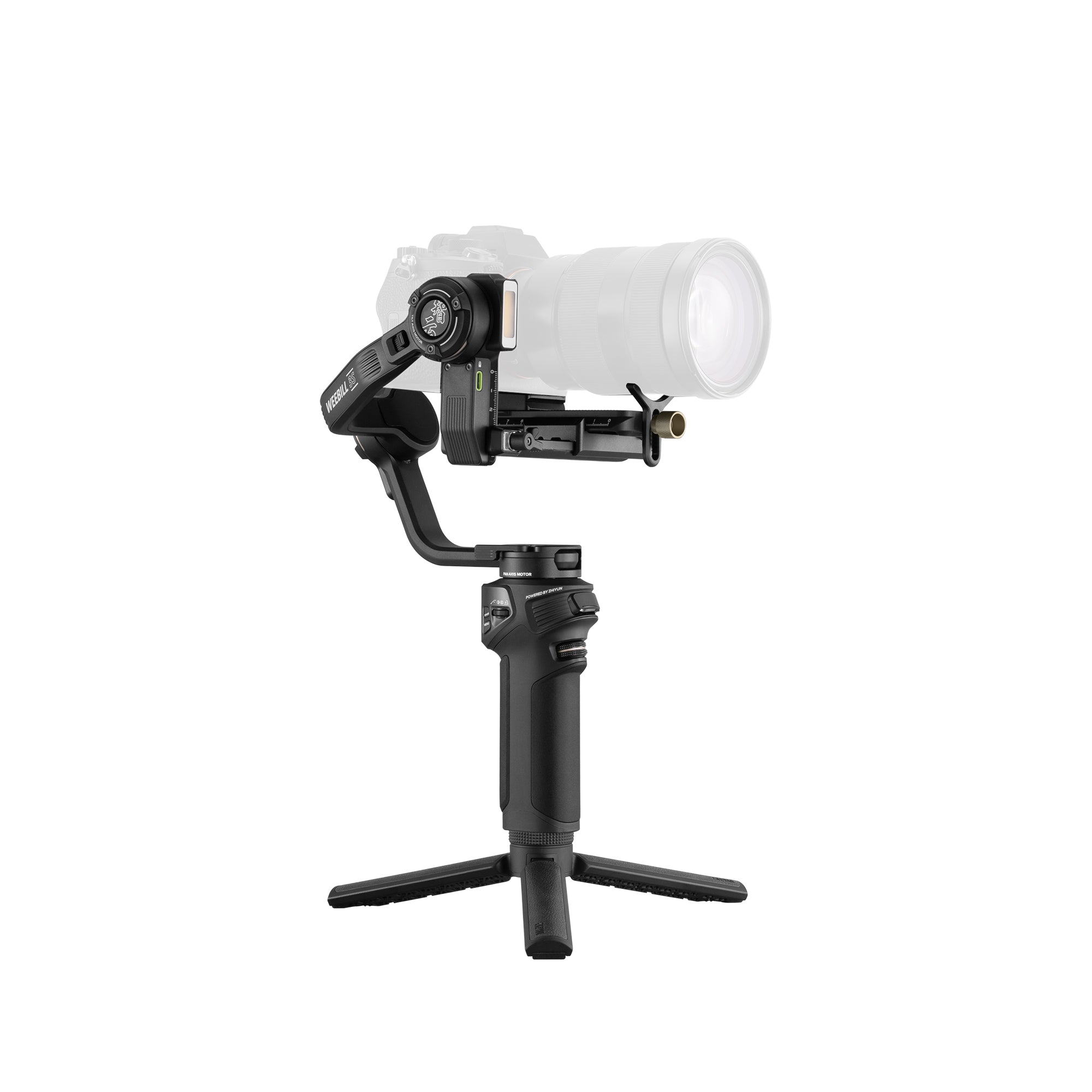
Questo tipo di ripresa beneficia di un gimbal abbastanza leggero da consentire un uso prolungato, ma sufficientemente robusto da sostenere una configurazione fotocamera di qualità. Lo ZHIYUN WEEBILL 5 soddisfa entrambi i requisiti con un corpo da 1,08 kg e una capacità di carico fino a 3 kg. Il suo manico a tracolla telescopico offre una presa più comoda per le riprese di inseguimento dal basso, mentre la modalità di ripresa verticale nativa facilita la cattura sia di riprese standard sia di contenuti per i social media. Per le riprese in solitaria, l'inseguimento AI può anche aiutare a mantenere un soggetto in movimento all'interno dell'inquadratura.
Inseguimento, orbita, rivelazione e sequenze a lunga durata
Le riprese di inseguimento seguono un soggetto attraverso una scena. Le riprese di orbita ruotano attorno al soggetto, mentre le riprese di rivelazione introducono gradualmente una persona, un oggetto o un luogo. Un gimbal può rendere questi movimenti più fluidi, ma l'operatore deve comunque controllare la velocità del cammino e i movimenti del corpo.
La modalità follow funziona bene quando la fotocamera deve rispondere gradualmente alle rotazioni. La modalità lock mantiene la fotocamera orientata in una direzione mentre l'operatore cambia posizione. Le riprese a lunga durata potrebbero richiedere il passaggio da una modalità all'altra, pertanto è consigliabile esercitarsi con i comandi prima di iniziare a filmare.
Riprese dal basso e verticali
Una presa a tracolla può facilitare l'abbassamento della fotocamera senza dover piegare il polso in una posizione scomoda, il che è particolarmente utile per riprese dinamiche dal basso di auto, atleti, animali domestici o dettagli in primo piano vicini al suolo.
Il montaggio verticale nativo è utile quando il video finale è destinato alle piattaforme di contenuti brevi. Una configurazione verticale fisica offre solitamente un bilanciamento migliore rispetto alla rotazione delle riprese durante il montaggio.
Copertura di eventi e configurazioni fotocamera ingombranti
I videomaker che coprono eventi si spostano spesso tra relatori, artisti, ospiti e riprese ambientali a campo largo senza avere il tempo di riconfigurare la fotocamera. I corpi full-frame, gli obiettivi più grandi, i monitor e gli accessori per la messa a fuoco possono anche sottoporre il gimbal a maggiori sollecitazioni.
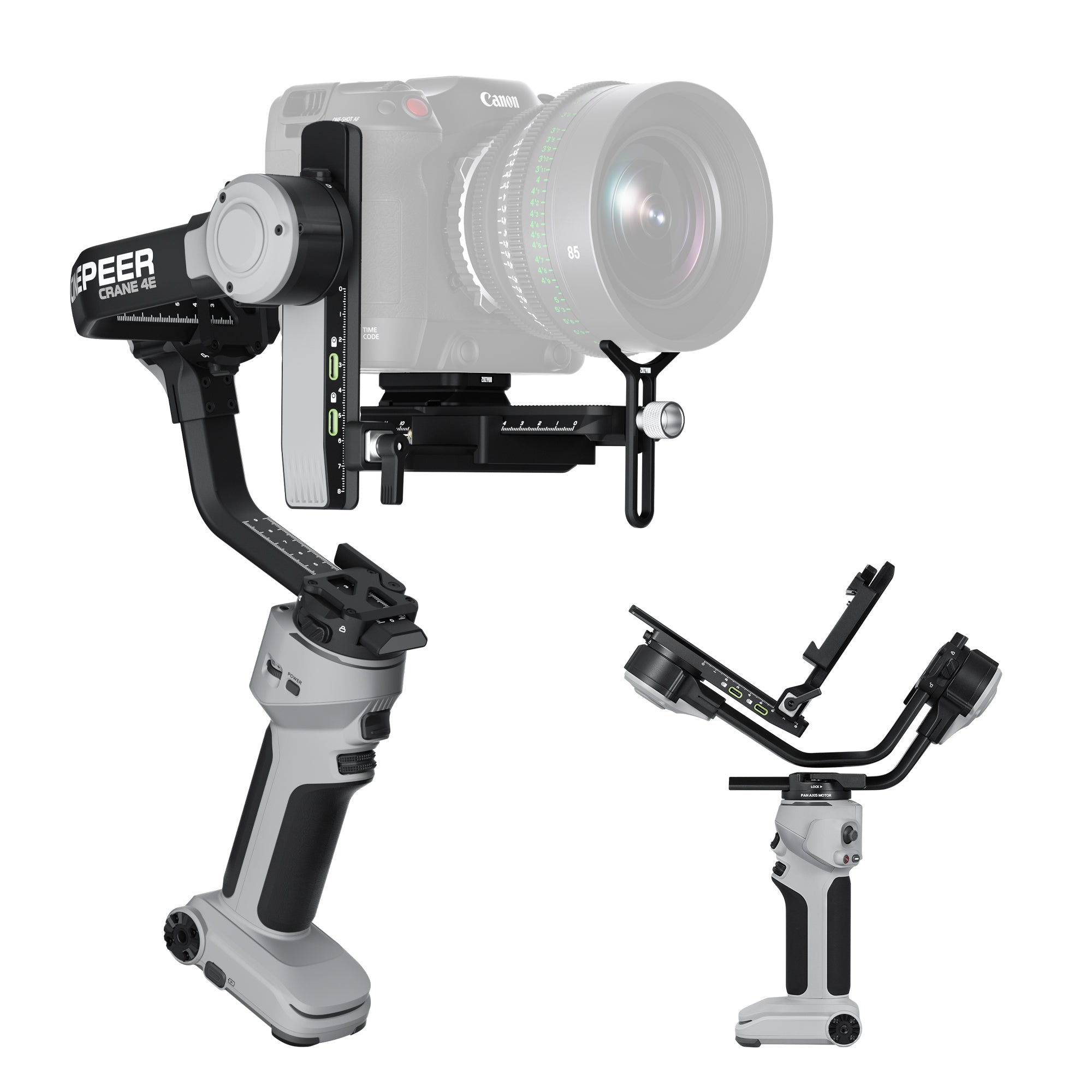
Questi incarichi richiedono uno stabilizzatore con una capacità e uno spazio sufficienti per gestire una configurazione più ingombrante. Lo ZHIYUN CRANE 4E supporta carichi fino a 4,5 kg e utilizza bracci con assi estesi per accogliere combinazioni fotocamera-obiettivo più grandi. La stabilizzazione a tre assi aiuta a mantenere movimenti controllati mentre si segue un'attività all'interno di una location, e il passaggio nativo da orizzontale a verticale facilita la cattura sia di riprese standard di eventi sia di clip per i social media senza dover riconfigurare il sistema.
Tipi di gimbal per fotocamera
I gimbal per fotocamera si distinguono comunemente per il modo in cui vengono impugnati e per l'attrezzatura che sono progettati per supportare. La scelta migliore dipende dal peso dell'intera configurazione, dalla posizione di ripresa preferita e dal tempo necessario all'operatore per rimanere in movimento.
Gimbal compatti a una mano per configurazioni leggere
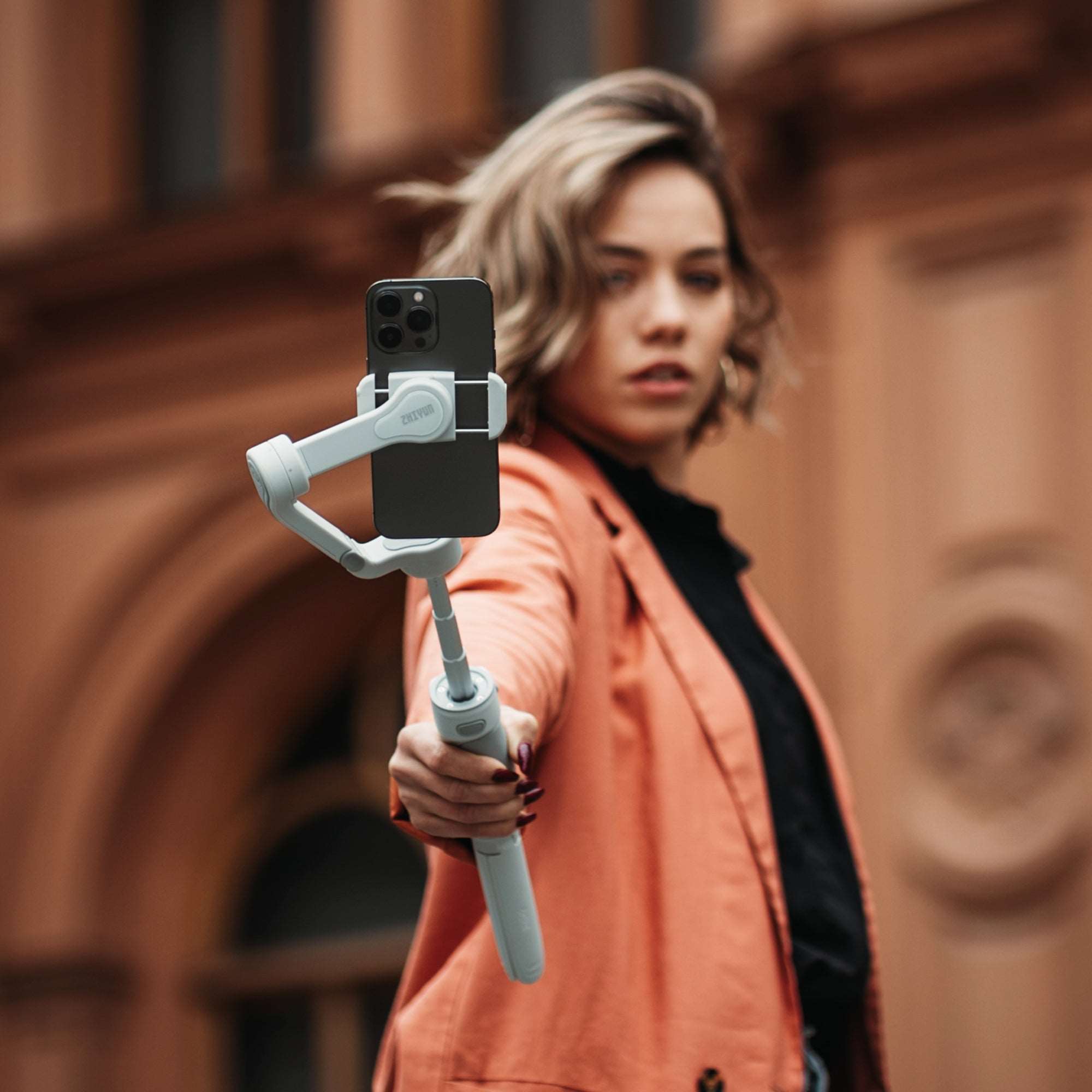
I gimbal a una mano sono progettati per fotocamere mirrorless compatte e obiettivi più piccoli. La loro struttura più leggera li rende più facili da riporre, trasportare e riposizionare, il che è utile per viaggi, produzioni brevi e rapidi cambi di location.
Gimbal a tracolla per riprese dal basso
Un design a tracolla offre una presa aggiuntiva che consente di tenere il gimbal più vicino al suolo senza costringere l'operatore a una posizione scomoda del polso. È particolarmente utile per riprese di inseguimento dal basso, di rivelazione e sequenze in movimento più lunghe. Chi apprezza questo equilibrio tra portabilità e maneggevolezza può esplorare la serie ZHIYUN WEEBILL.

Gimbal a due mani per configurazioni fotocamera più pesanti
Una configurazione a due mani distribuisce il peso della configurazione fotocamera su entrambi i bracci, migliorando il controllo durante riprese più lunghe. Questa configurazione è più adatta a fotocamere più grandi, obiettivi più pesanti, monitor esterni, trasmettitori wireless e altri accessori di produzione. Per configurazioni impegnative che richiedono una maggiore capacità di carico e spazio per espandersi, la serie ZHIYUN CRANE offre opzioni progettate per configurazioni di produzione video più ingombranti.
Come scegliere il gimbal giusto per la propria fotocamera?
La scelta di un gimbal parte dalla configurazione completa della fotocamera, non solo dal corpo della fotocamera. La capacità di carico è importante, ma anche le dimensioni, il bilanciamento e lo spazio fisico influiscono sulla compatibilità.
Verificare la compatibilità con fotocamera, obiettivo e accessori
Includere l'obiettivo, il filtro, il microfono, il motore follow-focus, il cavo e gli accessori di montaggio quando si verifica la compatibilità. Una configurazione potrebbe avere un peso inferiore al limite, ma essere comunque troppo lunga o mal bilanciata per lo spazio disponibile degli assi.
Abbinare la capacità di carico all'intera configurazione
Aggiungere il peso di ogni componente montato e lasciare una capacità ragionevole per gli accessori. Evitare di scegliere un gimbal la cui capacità di carico massima sia quasi identica al peso attuale della configurazione, specialmente se questa potrebbe essere ampliata in seguito.
Considerare peso, durata della batteria e maneggevolezza
L'operatore deve trasportare sia il gimbal sia l'intera configurazione fotocamera. Una configurazione che sembra gestibile durante un breve test potrebbe diventare faticosa durante un evento o una ripresa lunga. Anche la durata della batteria e il tempo di ricarica dovrebbero essere compatibili con il programma di produzione previsto. Per una configurazione per riprese video in viaggio, queste considerazioni si estendono a obiettivi, audio, alimentazione e archiviazione.
Abbinare i comandi e le funzioni al proprio stile di ripresa
Dare priorità alle funzioni utilizzate regolarmente. Il montaggio verticale supporta i contenuti per i social media, una presa a tracolla aiuta nelle riprese dal basso e la compatibilità con i comandi della fotocamera può ridurre la necessità di toccare la fotocamera durante una ripresa. Il follow focus è fondamentale quando la produzione richiede variazioni di messa a fuoco deliberate.
Come utilizzare un gimbal per fotocamera
Una configurazione corretta ha un effetto maggiore sulle prestazioni rispetto all'aumento della potenza dei motori. Montare l'intera configurazione fotocamera, bilanciare ciascun asse e testare il movimento prima di registrare.
Bilanciare la fotocamera prima di accendere il gimbal
Installare la fotocamera, l'obiettivo e gli accessori prima di bilanciare. Regolare ciascun asse finché la fotocamera può rimanere in posizione senza cadere immediatamente su un lato. Accendere un gimbal non bilanciato costringe i motori a lavorare di più e può causare vibrazioni.
Scegliere la modalità follow o lock giusta
Utilizzare la modalità follow quando la fotocamera deve rispondere fluidamente ai movimenti della mano. La modalità lock è migliore quando l'inquadratura deve rimanere orientata in una direzione. Alcuni gimbal offrono anche modalità che seguono sia il pan che il tilt per movimenti più dinamici.
Come utilizzare il follow focus su un gimbal per fotocamera
Fissare un motore follow-focus compatibile all'obiettivo, allineare il suo ingranaggio all'anello di messa a fuoco e collegarlo secondo le istruzioni del gimbal. Calibrare il motore prima di filmare, quindi utilizzare la rotella di messa a fuoco o il controller per effettuare variazioni graduali della messa a fuoco senza toccare l'obiettivo.
Esercitarsi a iniziare, fermarsi e girare in modo fluido
Iniziare a camminare prima di accelerare il movimento della fotocamera, mantenere le ginocchia leggermente rilassate e fare passi brevi e controllati. Rallentare prima di fermarsi e girare con il corpo invece di torcere solo i polsi. Queste abitudini riducono i movimenti che i motori non possono correggere completamente.
Quali errori con i gimbal per fotocamera dovresti evitare?
Molti problemi con i gimbal derivano da abitudini di configurazione o utilizzo piuttosto che da attrezzature difettose.
- Accendere i motori prima di bilanciare la fotocamera
- Cambiare l'obiettivo o gli accessori senza ribilanciare
- Verificare il peso del carico senza controllare lo spazio fisico
- Lasciare che i cavi tirino contro gli assi in movimento
- Usare la modalità follow o lock sbagliata per la ripresa
- Aspettarsi che impostazioni più potenti dei motori eliminino le oscillazioni verticali causate dal cammino
- Effettuare movimenti, partenze o arresti improvvisi
- Dimenticare di controllare le batterie sia della fotocamera sia del gimbal
Se il gimbal vibra, emette suoni insoliti o consente a un braccio di entrare in contatto con la fotocamera, interrompere la ripresa e controllare il bilanciamento, lo spazio fisico e le impostazioni dei motori.
Conclusione
Un gimbal per fotocamera riduce i movimenti rotazionali indesiderati consentendo al contempo movimenti controllati della fotocamera a mano libera. Sceglierne uno adatto all'intera configurazione, bilanciarlo prima dell'uso e abbinare la modalità di funzionamento alla ripresa. Una buona tecnica rimane essenziale perché nemmeno il miglior gimbal può sostituire un'inquadratura, una messa a fuoco e un movimento deliberati.
FAQ
Qual è un buon gimbal per fotocamera per principianti?
Un principiante dovrebbe cercare un bilanciamento semplice, un peso gestibile, comandi chiari e una capacità di carico sufficiente per l'intera combinazione fotocamera-obiettivo. Un modello compatto a tre assi è solitamente più facile da imparare rispetto a un grande sistema di produzione.
Un gimbal per fotocamera vale davvero la pena?
Un gimbal vale la pena quando le riprese in movimento fanno parte regolarmente del flusso di lavoro. Offre meno valore se la maggior parte delle riprese consiste in interviste statiche, inquadrature fisse o occasionali clip a mano libera.
Quale gimbal per fotocamera dovrei acquistare?
Iniziare con la compatibilità e il peso totale della configurazione. Quindi confrontare la maneggevolezza, la durata della batteria, il montaggio verticale, le opzioni dal basso, i comandi della fotocamera e il supporto per gli accessori. La scelta migliore è il modello che si adatta all'attrezzatura e alle riprese utilizzate più spesso.
Un gimbal per fotocamera è meglio di un treppiede?
Nessuno dei due è universalmente migliore. Un gimbal stabilizza la fotocamera mentre si muove, mentre un treppiede mantiene una posizione fissa. Molti videomaker usano entrambi perché risolvono esigenze di produzione diverse.
I fotografi usano i gimbal per fotocamera?
Sì, sebbene i gimbal siano più comuni nella produzione video. I fotografi possono usarli per contenuti dinamici dietro le quinte, panoramiche fluide, time-lapse in movimento o per inseguire un soggetto con un sistema fotocamera pesante.


