










How to Use Follow Focus on a Camera Gimbal: A Beginner’s Guide
por Leegglaya el Oct 21, 2026To use follow focus on a camera gimbal, install a compatible motor or electronic controller, balance the complete rig, calibrate the focus range, and adjust focus through the gimbal wheel or a remote controller. This guide explains the equipment, setup, operating techniques, and common mistakes beginners need to understand.
What Is Follow Focus and Why Use It on a Gimbal?
A gimbal stabilizes camera movement, while a follow focus system controls which part of the scene appears sharp. Combining the two allows the operator to move the camera and adjust focus without touching the lens directly.
How Follow Focus Controls the Lens
For anyone asking what is follow focus, it is a system that moves the lens focus ring from a separate wheel or controller. A motorized system places a small motor beside the lens, where it engages with a geared focus ring. Turning the controller then drives the motor and changes focus.
Some compatible cameras and lenses can receive electronic focus commands directly from the gimbal. This requires less hardware, while an external motor provides physical control for manual lenses and unsupported electronic systems.
When Manual Focus Works Better Than Autofocus
Autofocus is useful for unpredictable subjects and fast run-and-gun filming. Manual focus provides more control when the shot requires a deliberate transition, consistent timing, or repeatable results.
A follow-focus system can hold focus when another subject crosses the frame or shift attention smoothly between foreground and background. It is especially helpful for narrative scenes, product videos, interviews, and controlled tracking shots.
What Do You Need to Set Up Follow Focus?

Before assembling the rig, determine how the gimbal will communicate with the lens. The appropriate setup depends on the camera, lens, available mounting space, and desired level of control.
Choose Between Electronic Control and an External Focus Motor
Electronic control uses a compatible camera connection to adjust the lens through the gimbal. It keeps the rig lighter and reduces setup time, but support varies by camera and lens.
An external motor turns the focus ring mechanically. It works with many manual and geared lenses but requires a motor, mounting rod, lens gear, cable, and compatible controller. Wireless systems add a separate hand unit for a focus puller or remote operator.
Check Camera, Lens, and Gimbal Compatibility
When choosing a gimbal for a camera, confirm that the complete setup remains within its payload and balance range. The motor, mounting hardware, monitor, and cables must be included when calculating the final weight.
Check the official compatibility information for both camera control and focus control. A gimbal may support recording commands from a camera without supporting electronic focus adjustment.
Confirm Lens Ring Behavior and Motor Clearance
Mechanical lenses with physical end stops are easier to calibrate and use with repeatable focus marks. Focus-by-wire lenses may respond differently depending on how quickly the ring is turned, making precise repetition more difficult.
The focus motor and cables must also remain clear of the gimbal arms throughout the full movement range.
|
Control method |
Required hardware |
Best use |
Main advantage |
Main limitation |
|
Electronic control |
Compatible camera, lens, and connection |
Lightweight solo rigs |
Faster setup with fewer accessories |
Limited compatibility |
|
External focus motor |
Motor, gear ring, mount, and controller |
Manual focus on a gimbal |
Physical control over the lens ring |
Adds weight and requires calibration |
|
Wireless follow focus |
Motor, receiver, and hand unit |
Two-person crews |
Remote focus control |
More equipment and setup time |
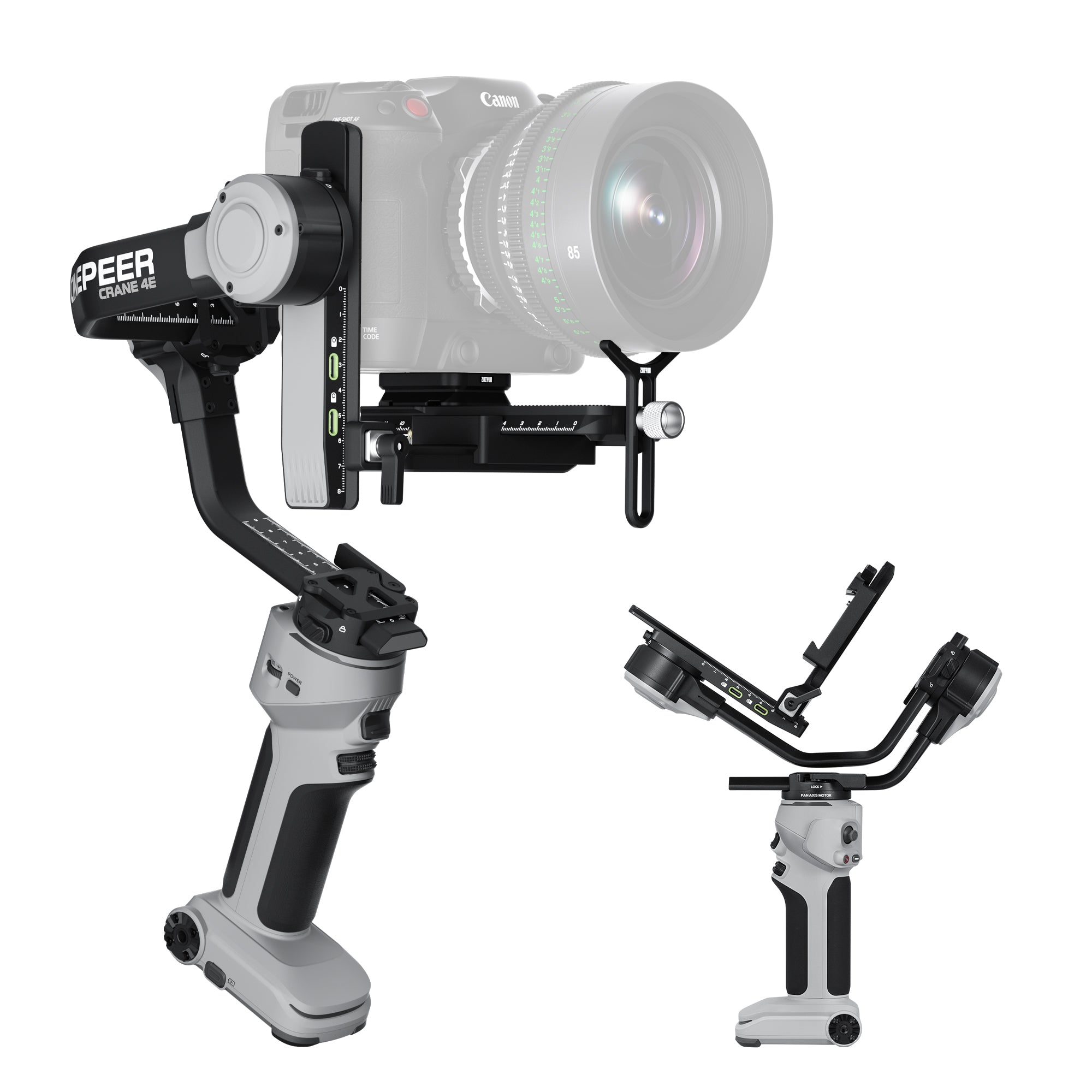
Once a focus motor, receiver, and monitor are added, the gimbal must support both the extra weight and the more complex accessory layout. For full-frame cameras and heavier lenses, the ZHIYUN CRANE 4 Combo provides a payload capacity of up to 4.5 kg and supports expansion for focus control and image transmission. This gives a solo operator or two-person crew more flexibility to monitor the image and adjust focus without touching the lens during a moving shot. Follow-focus motors and image-transmission accessories are sold separately, so the complete camera, lens, and accessory combination should be checked for compatibility before the rig is assembled.

How Do You Install and Calibrate Follow Focus?
Install every component before balancing the gimbal. Changing the lens, motor position, or mounted accessories afterward can affect both stabilization and focus accuracy.
Attach the Lens Gear and Focus Motor
Fit the gear ring securely around the lens focus ring, then position the motor so the gears engage evenly. Excessive pressure can create resistance and noise, while loose contact may cause the gears to slip.
Route the cable away from the moving axes and leave enough slack for normal gimbal movement.
Rebalance the Complete Gimbal Setup
Balance the camera with the lens, focus motor, cables, filter, and monitor attached. Check the tilt, roll, and pan axes according to the gimbal instructions.
After balancing, move the gimbal through its full range to confirm that the motor, cables, and lens do not strike an arm.
Connect the Controller and Calibrate the Focus Range
Connect the motor to the correct port and select the appropriate focus-control setting. Calibration identifies the closest and farthest focus positions so the motor does not push beyond the lens limits.
Repeat calibration whenever the lens or motor position changes. Focus-by-wire lenses may require a model-specific procedure because they do not always have physical end stops.
Test Motor Direction and Gear Contact
Turn the focus wheel slowly and confirm that the lens moves in the expected direction. Reverse the motor direction in the settings if necessary.
Listen for clicking and watch for hesitation. These symptoms may indicate poor gear contact, incorrect motor strength, or a slipping lens gear.
How Do You Use Follow Focus While Operating a Gimbal?
Learning how to use follow focus with a camera gimbal requires coordinating subject distance, camera movement, and the speed of the focus pull—skills that also contribute to smooth filming with camera stabilizers. Begin with predictable movements before attempting complicated tracking shots.
Set and Test the Near and Far Focus Points
Focus on the starting subject and mark that position on the controller when supported. Repeat the process for the ending subject, then rehearse the transition.
Focus marks work best when the camera and subjects repeat their positions. If the distance changes between takes, the marks must be adjusted.
Confirm Sharpness With Focus Peaking or Magnification
Use focus peaking to identify sharp edges and magnification to confirm the starting focus. An external monitor can make critical focus easier to judge, especially when working at a wide aperture.
For portraits, check the eyes rather than relying only on the general outline of the face.
Pull Focus During Tracking and Rack-Focus Shots
When tracking a subject moving toward or away from the camera, turn the control gradually as the distance changes. Sudden corrections are often more distracting than a small focus error.
For a rack-focus shot, hold briefly on the first subject, move focus at a controlled speed, and settle cleanly on the second. Practice while the camera is stationary before adding gimbal movement.
Match the Focus Pull to the Camera Movement
A slow push-in usually calls for a gradual focus adjustment, while a faster reveal may need a shorter transition. Starting and ending both movements smoothly keeps the focus change from distracting from the subject.
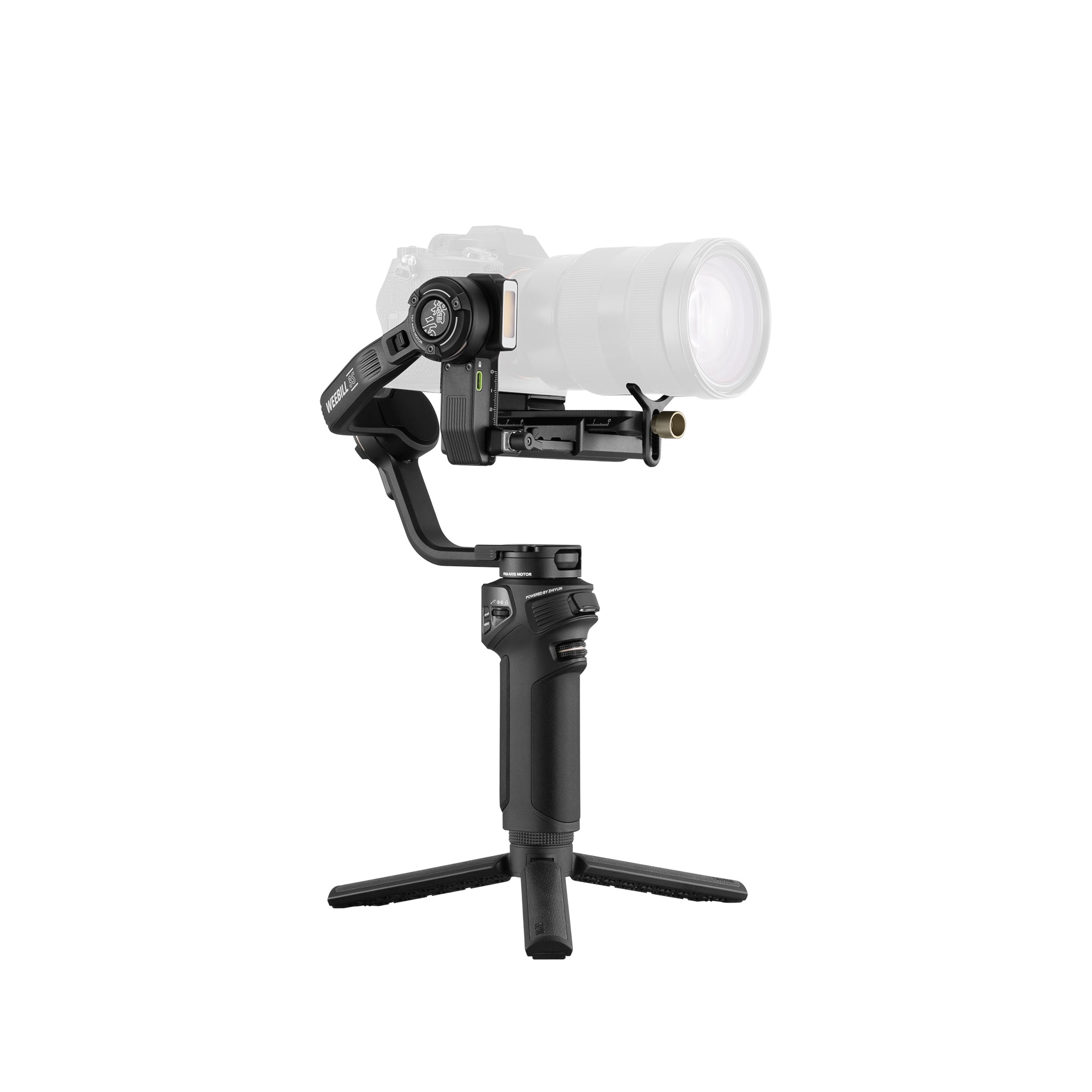
This coordination becomes more demanding when one person must control the gimbal and focus at the same time. The ZHIYUN WEEBILL 3S combines a compact design with support for camera setups weighing up to 3 kg, providing room for many mirrorless cameras, lenses, and compatible follow-focus accessories. Its sling-style handling also creates a more comfortable control position for tracking and low-angle shots, helping solo operators adjust focus while maintaining a steady grip and consistent camera movement.
What Follow Focus Mistakes Should You Avoid?
- Installing the focus motor after balancing the gimbal
- Pressing the motor gear too tightly against the lens
- Skipping calibration after changing lenses
- Assuming every focus-by-wire lens can repeat marked positions
- Allowing cables or mounting hardware to obstruct an axis
- Using an extremely wide aperture without considering depth of field
- Pulling focus faster than the camera movement requires
- Relying only on a small camera screen to judge sharpness
- Increasing motor strength instead of correcting the installation
- Starting an important take without recording a test clip
Conclusion
Building a dependable follow-focus rig around a gimbal stabilizer requires compatible equipment, correct motor placement, complete rebalancing, and accurate calibration. Practice simple focus transitions first, then combine them with tracking, reveals, and other controlled gimbal movements.
FAQ
Can You Use Follow Focus With an Autofocus Lens?
Yes. An external motor can turn the focus ring on many autofocus lenses, while compatible systems may offer electronic control. Focus-by-wire lenses may provide less repeatable results.
Do You Need a Focus Motor?
Not always. A motor is unnecessary when the camera, lens, and gimbal support direct electronic focus control. Manual lenses generally require an external motor.
Can One Person Operate the Gimbal and Pull Focus?
Yes. A solo operator can use a wheel on the gimbal handle, although complicated movement and shallow depth of field may be easier with a separate focus puller.
Why Does a Follow Focus Motor Slip or Make Noise?
The gears may be misaligned, too loose, or pressed together too tightly. Incorrect motor strength or an uncalibrated lens can also cause noise and slipping.
Is Follow Focus Worth It for Solo Filmmakers?
It is useful for controlled manual focusing, planned rack-focus shots, and lenses with unreliable autofocus. For unpredictable subjects, dependable autofocus may remain the more practical option.


