










Camera Gimbal vs Handheld Shooting: Which Setup Works Better for Video Creators?
Choosing between a camera gimbal and handheld shooting is not simply a choice between smooth and shaky footage. Each method creates a different visual language.
A gimbal can produce controlled tracking shots, polished reveals, smooth walk-throughs, and stable movement around a subject. Handheld shooting can feel immediate, human, tense, observational, or documentary-like. Neither method is automatically more professional. The correct choice depends on the story, shooting environment, camera package, operator experience, and final platform.
For creators considering a camera gimbal stabilizer, the most useful question is not “Which method is better?” It is “Which movement style communicates this scene most effectively?”
The Core Difference Between Gimbal and Handheld Footage
Handheld footage records part of the operator’s natural movement. Breathing, footsteps, wrist adjustments, and body shifts become visible in the image. Good handheld work controls these movements rather than eliminating them.
Gimbal footage uses motorized stabilization to reduce unwanted movement across three axes. This allows the operator to walk, follow, orbit, push in, pull back, or change height while keeping the frame more stable.
The practical differences are:
|
Factor |
Handheld Shooting |
Camera Gimbal |
|
Visual feeling |
Immediate and organic |
Smooth and controlled |
|
Setup time |
Usually faster |
Requires balancing and preparation |
|
Fatigue |
Depends on camera rig |
Weight is distributed through the stabilizer |
|
Fast lens changes |
Easier |
May require rebalancing |
|
Walking shots |
Can show footsteps |
Better at reducing walking shake |
|
Tight spaces |
Often easier |
Requires operating clearance |
|
Emotional style |
Documentary, raw, intimate |
Cinematic, polished, immersive |
A video production may use both methods. The strongest workflow often combines stable establishing movement with more intimate handheld coverage.
When Handheld Shooting Works Better
Handheld shooting is effective when the camera needs to react instantly. Documentary crews, news shooters, behind-the-scenes creators, and event videographers may not have time to balance a gimbal before every scene.
It can also support the emotional tone. A controlled amount of movement can make the viewer feel physically present during a crowded street sequence, fast backstage moment, sports scene, or dramatic conversation.
Handheld may be the better choice when:
· The scene changes without warning
· The operator must switch lenses frequently
· The location is extremely confined
· The subject movement is unpredictable
· The footage should feel observational
· The camera needs to move rapidly between low and high positions
· The operator is using a shoulder rig or supported cinema configuration
Good handheld footage still requires technique. Keep the camera close to the body, use three points of contact when possible, move from the hips, and avoid gripping the camera too tightly. Image stabilization can help, but it cannot replace controlled body movement.
When a Camera Gimbal Stabilizer Is the Better Tool
A gimbal is especially useful when movement itself is part of the shot design. Walking into a venue, following a person through a doorway, circling a product, tracking a couple, or revealing a landscape all benefit from controlled stabilization.
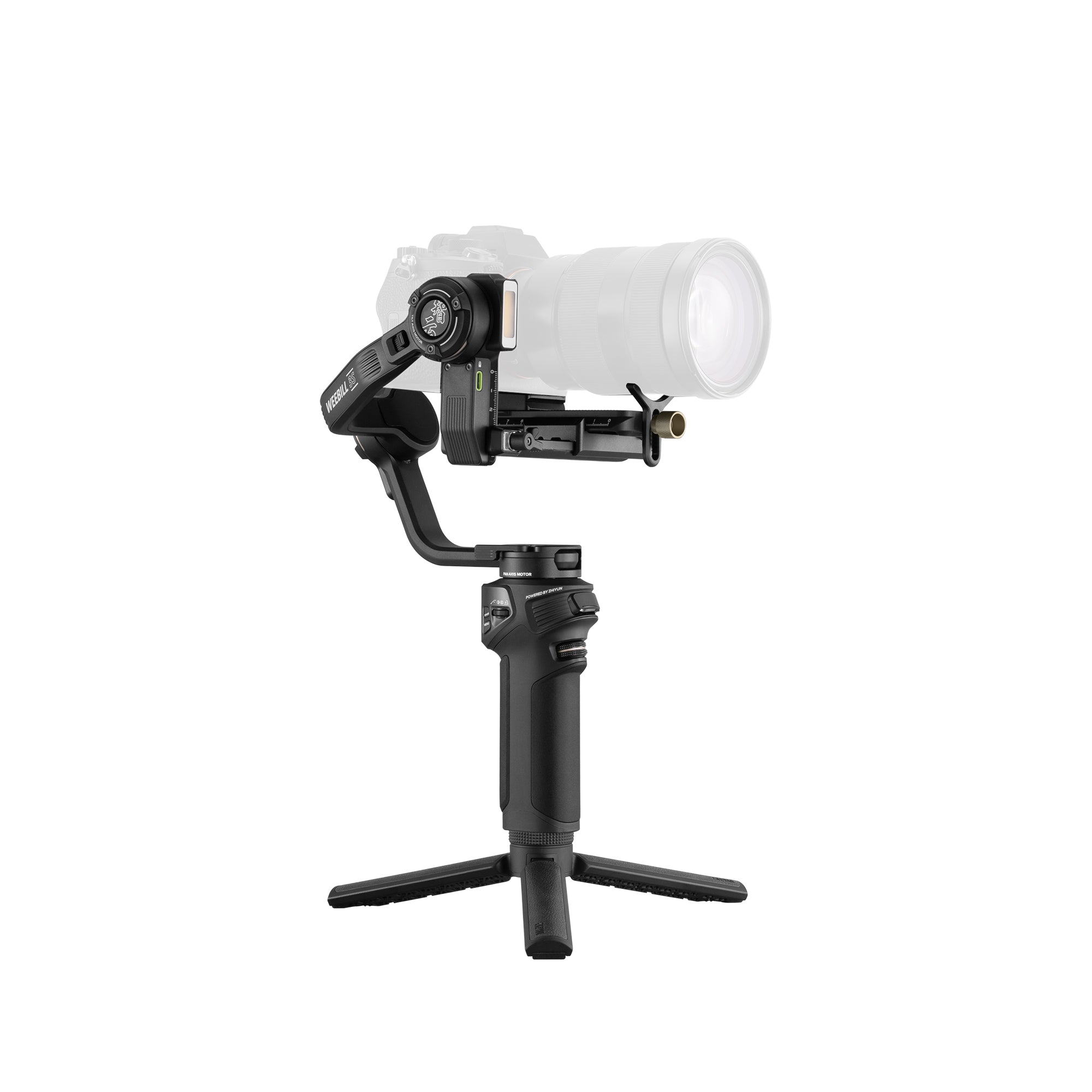
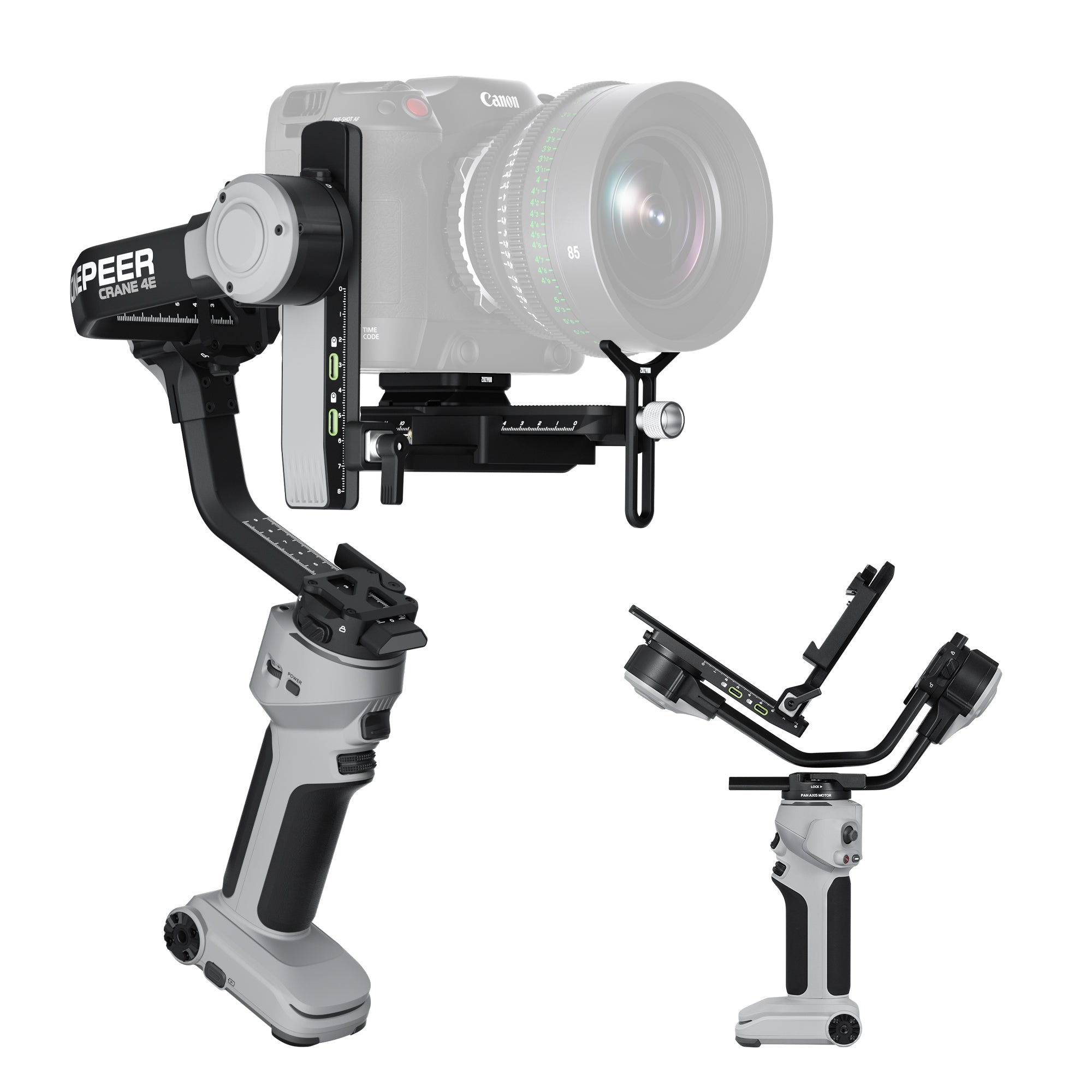
The ZHIYUN Weebill 3E is suited to creators who need a compact camera stabilizer ZHIYUN workflow for mirrorless or lightweight camera production. It can support travel films, portrait reels, creator videos, interviews, and location-based content without requiring a large rig.

A gimbal is particularly valuable for:
· Forward and backward tracking
· Side-follow shots
· Orbiting around a subject
· Low-angle movement
· Room and venue walk-throughs
· Wedding entrances
· Fashion walking shots
· Product reveals
· Vertical social video
The stabilizer controls the camera, but the operator still controls the movement. Poor walking technique can produce vertical bounce even when the horizon remains stable. Keep the knees slightly bent and move with shorter, softer steps.
Choosing Between WEEBILL 3E and WEEBILL 3S
Creators searching for a ZHIYUN stabilizer should select a model based on the complete camera package and shooting workflow rather than the camera body alone.
The Weebill 3E is a practical option for creators prioritizing compactness, straightforward stabilization, and fast mobile production.
The ZHIYUN Weebill 3S is better suited to users who want a more developed operating system for longer shoots, more demanding camera configurations, or a broader range of professional movement techniques.

Before choosing, consider:
· Camera and lens weight
· Lens length
· Whether accessories will be mounted
· Horizontal and vertical delivery requirements
· Shooting duration
· Frequency of lens changes
· Low-angle operating needs
· Travel and packing limitations
Do not select a gimbal only because it has a higher theoretical capacity. A compact camera on an unnecessarily large stabilizer may create more fatigue without improving the footage.
How Movement Style Changes the Viewer’s Experience
A smooth forward push can create anticipation. A slow orbit can reveal space around a subject. A stable side-track can make walking feel confident and deliberate.
Handheld movement creates a different response. Small movement can make an interview feel less formal. Faster handheld motion can increase tension. A slightly unstable close-up can communicate urgency or uncertainty.
Consider a restaurant commercial. Smooth gimbal footage may introduce the dining space, follow a server, and reveal a finished dish. Handheld close-ups may then capture the chef’s hands, rising steam, or spontaneous customer reactions.
For a documentary, the balance may reverse. Most of the story may be handheld, while a few stable transitions help establish location and pace.
The tool should follow the narrative, not the other way around.
A Practical Hybrid Workflow
A hybrid approach gives creators greater flexibility.
Use the gimbal for:
· Establishing movement
· Planned transitions
· Subject tracking
· Long walk-throughs
· Hero product shots
Use handheld shooting for:
· Fast reactions
· Close emotional coverage
· Unplanned details
· Tight locations
· Rapid lens changes
Before production, mark which shots genuinely require stabilization. This avoids carrying the gimbal for every moment and prevents a film from feeling mechanically smooth from beginning to end.
A camera gimbal ZHIYUN setup is most effective when it solves a clear movement problem. The Weebill 3E and Weebill 3S can help creators produce stable, repeatable movement, but handheld shooting remains an important creative technique.
Professional videography is not about removing all camera movement. It is about deciding which movement the audience should feel.