










Best Lighting for Photography: Lights and Setups for Better Photos
by Leegglaya on Oct 27, 2026The best lighting for photography gives you control over the subject’s shape, color, texture, and separation from the background. The right choice may be window light, a continuous LED, or flash, depending on the subject and whether you need to preview the result or freeze movement. This guide explains how to evaluate light, build practical setups, and choose photography lights for indoor, portrait, studio, and product photography.

What Makes the Best Lighting for Photography?
Good light is not defined by brightness alone. Direction, source size, distance, and color accuracy determine how the subject will appear in the final photograph.
Direction and Source Size Shape the Subject
Front lighting produces an even result but may reduce visible depth. Moving the light to one side creates highlights and shadows that reveal facial structure, fabric, and product texture.
A large source placed close to the subject produces softer shadow edges. A small or distant source creates harder, more defined shadows. The apparent size of the source matters more than its physical dimensions, which is why moving a softbox closer can change the image significantly.
Output and Distance Control Exposure and Contrast
A light needs enough output to reach the subject through any diffusion or modifier being used. Large softboxes create flattering light, but they also reduce the amount of light reaching the subject.
Distance affects both brightness and falloff. A nearby light creates a more noticeable difference between the illuminated and shadow areas, while a light placed farther away can produce more even coverage across a group or larger set.
Color Accuracy Keeps Skin Tones and Products Natural
Accurate lighting reduces unwanted color shifts in skin, clothing, food, and commercial products. When comparing LEDs, color-rendering measurements such as CRI and TLCI can help indicate how faithfully a fixture reproduces colors.
Adjustable color temperature also makes it easier to match window light, household lamps, or other fixtures. Consistent color is particularly important when several lights illuminate the same subject.
Which Type of Lighting Should You Use?

The most suitable lighting for photography depends on the level of control, output, and portability the assignment requires. Natural light is accessible, continuous LEDs show the effect immediately, and flash provides greater motion-freezing power.
|
Light source |
Best for |
Real-time preview |
Freezing motion |
Portability |
Main limitation |
|
Natural light |
Indoor portraits, lifestyle, outdoor photos |
Yes |
Depends on available brightness |
Excellent |
Changes with time and weather |
|
Continuous LED |
Portraits, products, food, hybrid photo and video |
Yes |
Limited |
Varies by output and power source |
May require higher ISO or a wider aperture |
|
Flash or strobe |
Events, action, groups, studio portraits |
Limited without a modeling light |
Excellent |
Varies by system |
Requires more practice to predict the result |
Natural Light for Simple Indoor and Outdoor Photos
Window light is often the best lighting for indoor photography when the window is large and the light is indirect. Positioning the subject beside the window adds shape, while a white reflector can soften shadows on the opposite side.
Natural light is inexpensive and flattering, but it can change quickly. Cloud movement, time of day, and nearby wall colors may affect brightness and white balance during a session.
Continuous LED Lighting for Visible, Adjustable Results
Continuous LEDs allow photographers to see shadow placement, reflections, and background separation before releasing the shutter. This makes them especially practical for portraits, products, food, and assignments that include both photographs and video.
In low-light photography, the main limitation of continuous LEDs is motion control. An LED may illuminate a stationary portrait effectively, but it usually cannot freeze dancing, sports, or fast gestures as efficiently as flash.
Flash and Strobes for Freezing Motion
Flash produces a short burst of light that can freeze movement while allowing the photographer to use a lower ISO or smaller aperture. Speedlights work well for mobile assignments, while studio strobes provide greater output and faster recycling for controlled sessions.
Because the full effect is visible only after the flash fires, beginners may need test shots or a light meter to establish exposure and lighting ratios.
Best Photography Lighting Setups for Different Shoots
The best photography lighting setups follow a core principle of photography lighting basics: begin with one clear key light, then add other fixtures only to solve specific problems such as dark shadows, poor background separation, or insufficient product detail.
Window Light and a Reflector for Indoor Photography
Place the subject near a window and turn the face or product slightly toward the light. Side lighting adds depth, while moving the subject closer to the window softens the transition between highlights and shadows.
Position a white reflector opposite the window if the shadow side becomes too dark. Turning off overhead lights can prevent mixed color temperatures and unflattering shadows beneath the eyes.
One-Light and Two-Light Setups for Portrait Photography

Many of the best lighting setups for portrait photography begin with one key light positioned about 45 degrees to the side and slightly above eye level. This creates natural facial depth while keeping both eyes clearly visible.
A second fixture should solve a specific problem. It can provide fill to soften shadows, create a rim around dark hair or clothing, or add controlled color to the background.
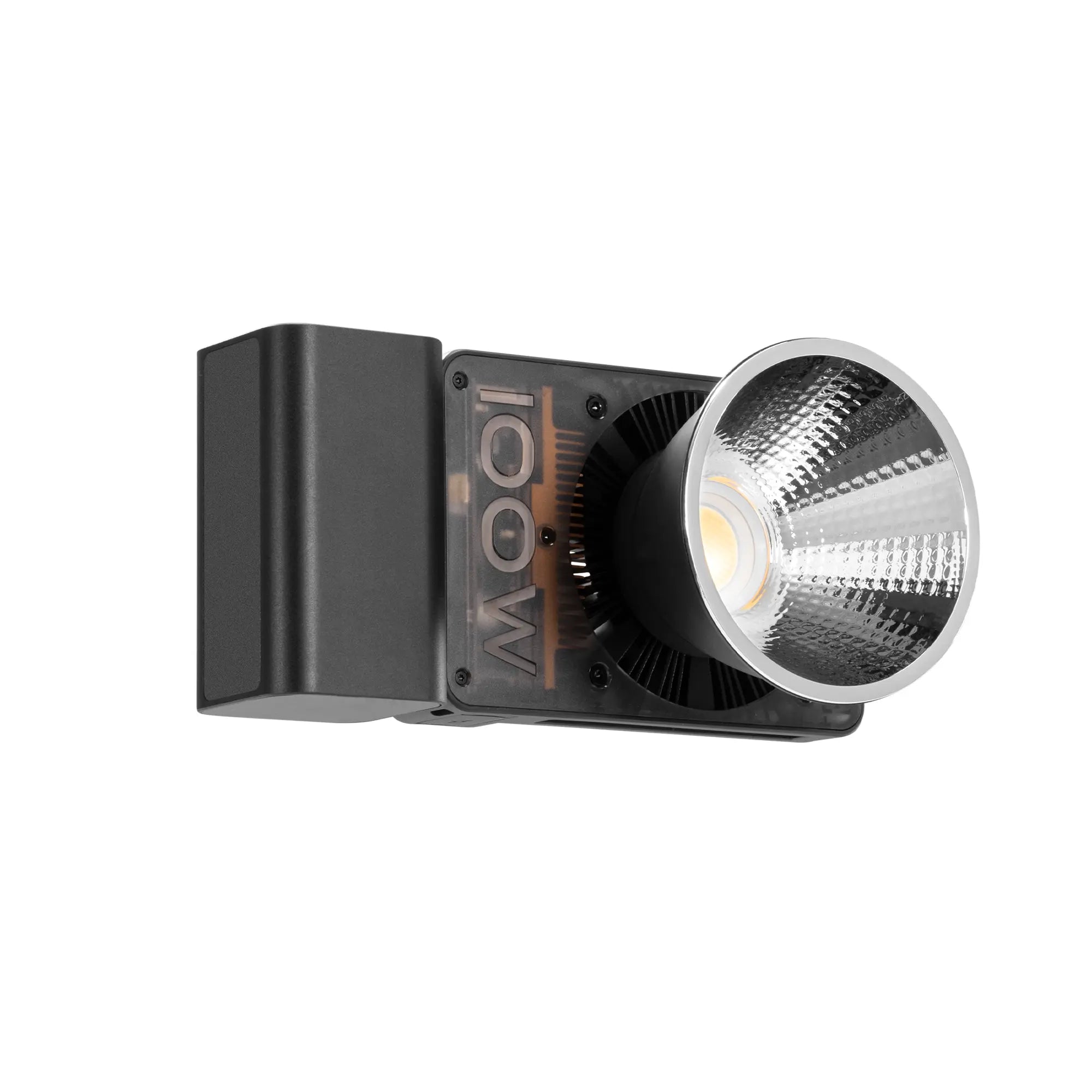
A light that can move between these roles makes the setup easier to adapt. The ZHIYUN MOLUS X100 RGB combines 100W output with a 2700K–10000K color-temperature range and support for light-shaping accessories. Paired with a compatible softbox, it can produce a controlled key light for natural skin tones. When repositioned as a second source, its RGB controls can add subtle rim or background color. Because the output remains visible throughout the setup, photographers can refine highlights, shadows, and color balance before taking the photograph.
Three-Light Setup for Studio Portraits
A three-light portrait setup commonly uses a key light to shape the face, a lower-powered fill to control shadow contrast, and a rim or background light to separate the subject. Each fixture should have a clear purpose rather than illuminating the portrait from three equal directions.
Because the key light carries most of the exposure and often works through the largest modifier, it needs sufficient output and flexible light-shaping options. The ZHIYUN MOLUS X200 RGB is well suited to this role, combining 200W output with a native Bowens mount for softboxes, reflectors, grids, and other compatible modifiers. A softbox can create a broad, controlled key light, while lower-powered fixtures provide fill and background separation. Its continuous output also allows photographers to evaluate the complete three-light balance in real time and maintain the same setup when switching between portraits and video. Flash remains the better option when the session requires stronger motion-freezing performance.
Side and Overhead Lighting for Product Photos
Side lighting reveals texture on food, fabric, wood, and other dimensional surfaces. Overhead lighting creates clean tabletop compositions, while backlighting can define the shape of transparent bottles, glassware, and drinks.
Lighting position should be adjusted while monitoring reflections, especially on jewelry, metal, and glossy packaging. Adding diffusion enlarges the apparent light source and produces smoother, more controlled highlight transitions.
Because tabletop photography often requires moving a light by only a few inches, a compact fixture is easier to position than a full-size studio light. The ZHIYUN FIVERAY M60 Ultra provides 60W RGB output in a 430 g body with a built-in battery, reducing both equipment size and cable clutter around the set. It can serve as a side light for texture, an overhead accent for flat lays, or a rim and background light for greater separation. Its portability also makes it easier to refine reflections and highlights as the product or camera angle changes.
How Do You Choose the Right Photography Lights?
The right fixture should match the subject, shooting space, and desired camera settings. The best studio lights for photography are not necessarily the most powerful models available, but they should provide enough output after diffusion is added.
Match the Output to the Subject and Shooting Space
A tabletop product requires less coverage than a full-body portrait or large group. Consider the light-to-subject distance, modifier size, working aperture, and amount of ambient light in the room.
More output provides flexibility, but excessive power can be difficult to control in a small space. A fixture with a useful dimming range is often more practical than one designed only for maximum brightness.
Check Color Accuracy and Color Temperature Range
Look for consistent color rendering across the fixture’s brightness and temperature range. Portrait and product photographers should prioritize accurate skin tones and faithful reproduction of fabrics, packaging, and food.
A broad color-temperature range helps match daylight, warm interiors, and other fixtures. RGB controls are valuable for creative backgrounds and accents, but they are not essential for every photographer.
Consider Modifier and Mount Compatibility
Softboxes, umbrellas, grids, reflectors, and barn doors change how the light reaches the subject. Before choosing a fixture, check which modifiers fit directly and whether an adapter is required.
A common mount provides more options as the lighting kit grows. The stand and support hardware must also be strong enough to hold the light and modifier safely.
Compare Portability, Power Options, and Controls
Photographers working on location may benefit from a compact light with a built-in battery or portable power option. A fixed studio can prioritize sustained output, larger modifiers, and AC operation.
Physical controls should remain easy to reach, while app or group control can simplify multi-light setups. These conveniences should support the workflow rather than replace reliable manual operation.
What Photography Lighting Mistakes Should You Avoid?
- Adding more fixtures before positioning the key light correctly
- Placing a small, hard source too close to the subject
- Using overhead room lighting that creates deep eye shadows
- Mixing daylight and warm interior lights without checking white balance
- Choosing a large softbox without enough output to illuminate it
- Positioning the key light too low for a natural portrait
- Ignoring glare on glasses, jewelry, and glossy products
- Increasing ISO before improving the light position or brightness
- Expecting continuous LEDs to freeze movement like flash
- Buying several lights without budgeting for stands, modifiers, and safe mounting hardware
Conclusion
The best lighting begins with one well-positioned source, not the largest possible collection of fixtures. Choose natural light, continuous LEDs, or flash according to the subject, then add modifiers and secondary lights only when they solve a visible problem. A simple setup that is easy to control will usually produce more consistent photographs than a complicated arrangement that has not been carefully tested.
FAQ
What Size Softbox Is Best for Portrait Photography?
A 24- to 36-inch softbox is practical for headshots and small spaces, while a 36- to 48-inch modifier provides broader coverage for half-body or full-body portraits. Available room, placement distance, and stand stability should also influence the choice.
Are Ring Lights Good for Portrait Photography?
Ring lights produce even frontal illumination and recognizable circular catchlights, making them useful for beauty images and close-up content. Their light can look flat, so a side-positioned softbox is often preferable when the portrait needs greater facial depth.
How Do You Light Someone Wearing Glasses Without Glare?
Raise the key light or move it farther to the side until its reflection disappears from the lenses. Slightly changing the subject’s head angle can also help. Check both lenses carefully because a small reflection may not be obvious on the camera screen.
What Lighting Works Best for Large Group Photos?
Use a broad source positioned far enough away to cover the group evenly. Two lights placed on opposite sides can reduce brightness differences across wide groups. Keep the subjects on a similar plane and confirm that the back row receives sufficient light.
Can You Use the Same Continuous Lights for Photography and Video?
Yes. Continuous lights are useful for hybrid assignments because the same placement and modifier can serve both formats. Confirm that the fixture provides enough output for the intended aperture and ISO, and use flash when the photograph requires stronger motion-freezing performance.


